
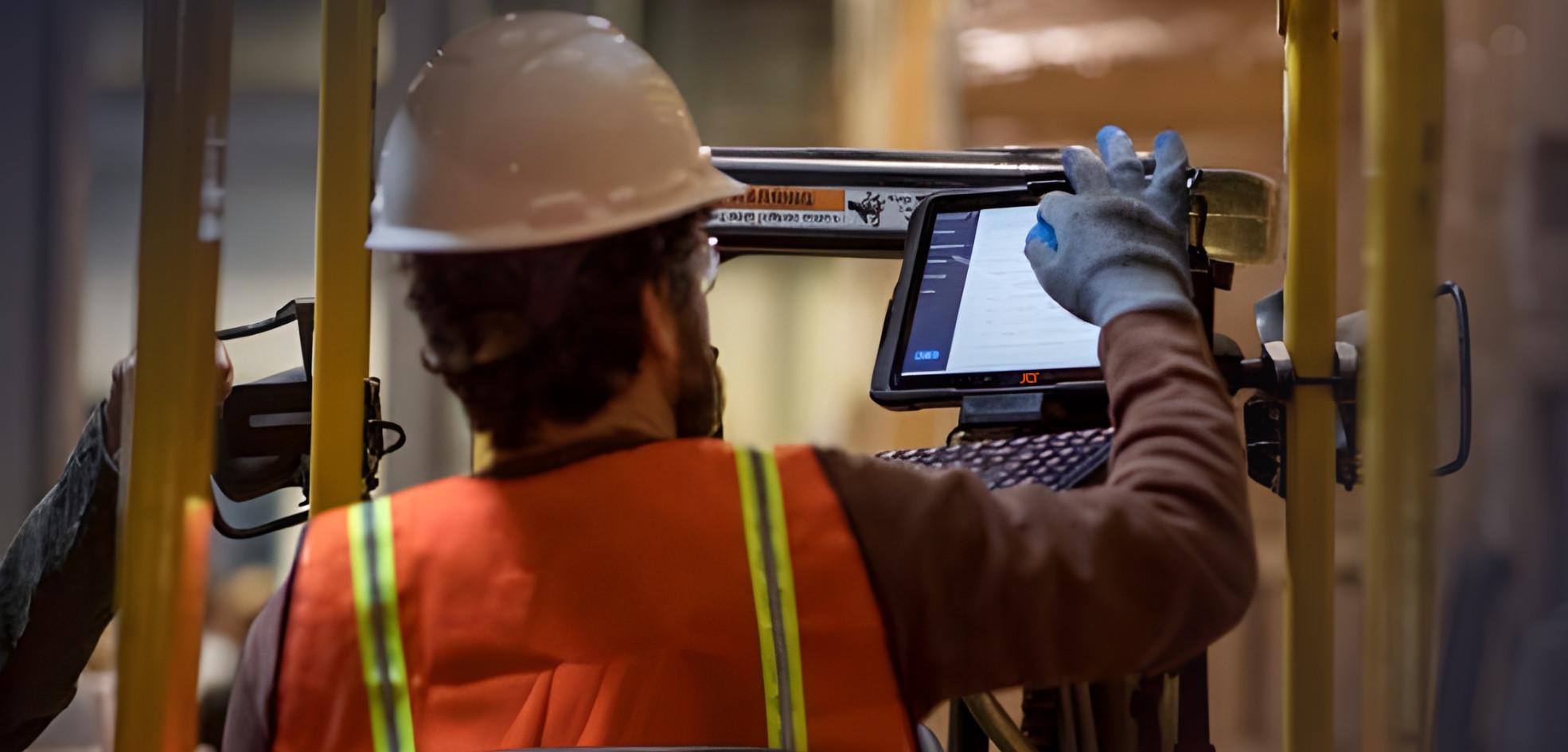
When work happens on the move, technology must move with it. In warehouses, ports, factories, and outdoor yards, fixed desks and consumer devices quickly fall short. This is where rugged mobile computers step in—engineered to support real operational work in demanding conditions without compromising reliability.
Devices designed for offices prioritize comfort, appearance, and short upgrade cycles. Industrial environments demand durability, accuracy, and consistent performance, often under constant vibration, dust exposure, temperature variation, and long operating hours. Industrial-grade mobile computing devices exist because frontline operations cannot afford frequent device failure or technology-related downtime.
This guide explores industrial mobile computing through three primary form factors—handhelds, rugged tablets, and vehicle-mounted computer—and explains how each serves a distinct role across industrial environments.
What are industrial-grade rugged mobile computers?
Rugged mobile computers are portable or vehicle-mounted computing devices designed for industrial and commercial use, where dust, vibration, moisture, temperature swings, and constant handling are part of daily operations.
Unlike consumer smartphones or laptops, these systems are purpose-built for:
- Continuous daily use across long shifts
- Real-time data capture and processing
- Integration with enterprise systems such as WMS, ERP, and fleet software
- Operation in environments that can damage standard electronics
Many industrial mobile computing devices run enterprise versions of Android or Windows, support professional barcode scanning or RFID, and feature reinforced housings with certified protection ratings.
These foundational capabilities define industrial-grade mobile computing, but understanding how they are implemented in different hardware helps clarify what to look for when evaluating devices.
How industrial mobile computers differ from consumer devices
Although they may resemble tablets or phones at first glance, industrial computing devices follow a fundamentally different design philosophy.
Consumer devices are generally built to be lightweight, visually appealing, and frequently replaced. Ruggedized mobile devices are built to be functional, stable, and long-lasting.
Key differences include:
- Durability by design: Shock-resistant frames, sealed ports, and reinforced displays
- Industrial data capture: Dedicated scan engines that can outperform camera-based scanning
- Operational lifecycle: Devices designed to remain in service for years
- Environmental tolerance: Reliable performance in cold storage, outdoor yards, and dusty production areas
- IT control: Enterprise device management and long-term operating system support
In short, consumer devices are designed for convenience during travel or everyday personal use, while industrial computing systems are designed to perform reliably during work.
A brief history: how mobile computing became industrial-grade
Mobile computing did not begin in warehouses or factories. Early portable computers in the 1980s were heavy, power-hungry, and limited to basic tasks. They introduced portability, but not true operational mobility.
During the 1990s and early 2000s, laptops and PDAs improved battery operation but remained relatively fragile. As industries pushed digital workflows onto shop floors, yards, and vehicles, limitations became obvious: batteries degraded quickly, screens cracked, and vibration contributed to hardware failures.
This gap led to the development of purpose-built industrial devices. Manufacturers reinforced housings, improved power systems, introduced industrial connectors, and engineered displays readable in both bright sunlight and low-light environments.
Vehicle-mounted computers evolved further by removing reliance on internal batteries and designing systems specifically for continuous vibration, vehicle power input, and fixed mounting. Instead of adapting handheld or tablet devices beyond their intended use, manufacturers could engineer vehicle computers around the conditions of the application.
Types of industrial mobile computers and where they are used
Not all industrial mobile computing devices solve the same problem. Each form factor supports specific workflows and operating conditions.
Handheld industrial computers
Definition
Handheld industrial devices are compact, one-hand-operated systems designed for fast, repetitive tasks that require frequent movement and data capture.
Key features
- Integrated industrial-grade 1D/2D barcode scanners or RFID readers
- Sealed housings for dust and moisture protection
- Touchscreens usable with gloves or in cold conditions
- Swappable or extended-life batteries for shift-long operation
Industries and applications
- Warehousing and distribution: picking, put-away, cycle counting
- Retail: Inventory checks, shelf replenishment, and mobile POS
- Field services: Asset identification, inspections, and job updates
Handheld devices are ideal where speed, portability, and accuracy matter more than screen size.
Rugged tablets
Definition
Rugged tablets are larger mobile computers designed for tasks that require visual clarity, interaction, and data review while maintaining durability in challenging environments.
Key features
- Larger displays for diagrams, dashboards, and documentation
- Touch interfaces designed for industrial use
- Optional scanning accessories and expansion modules
- Balanced mobility with higher processing capability
Industries and applications
- Manufacturing: Quality checks, production reporting, and SOP access
- Utilities and energy: Asset management and maintenance workflows
- Construction and inspections: Site documentation and compliance checks
Rugged tablets bridge the gap between handheld devices and fixed workstations, making them suitable for roles where workers must both move and analyze information.
Vehicle-mounted industrial computers
Definition
Vehicle-mounted computers are fixed-installation systems designed specifically for industrial vehicles such as forklifts, trucks, cranes, and heavy machinery.
Key features
- Powered directly from vehicle electrical systems
- Designed to withstand continuous vibration and mechanical shock
- Reinforced housings and sealed industrial connectors
- Displays optimized for indoor warehouses and outdoor yards
Industries and applications
- Warehousing and logistics: forklift-based picking and replenishment
- Ports and terminals: container handling and yard management
- Mining and agriculture: equipment monitoring and operator guidance
Vehicle-mounted systems are well suited to vehicle-centric workflows where continuous power, stable mounting, and reliable access to operational applications are important.
Comparing industrial mobile computer types
| Feature | Handheld Devices | Rugged Tablets | Vehicle-Mounted Computers |
|---|---|---|---|
| Primary Use | Fast data capture | Visual interaction and documentation | Vehicle-based operations |
| Mobility | Fully handheld | Portable, two-handed | Fixed to vehicle |
| Power Source | Internal battery | Internal battery | Vehicle power |
| Screen Size | Small | Medium to large | Large |
| Vibration Resistance | Moderate | Moderate | Very high |
| Typical Industries | Warehousing, retail, field service | Manufacturing, utilities, construction | Logistics, ports, mining |
While specifications and form factors matter, selection ultimately comes down to how work is performed on the ground.
The right industrial computing device for your needs depends on how and where work happens:
- High movement and frequent scanning → Handheld devices
- Detailed information, inspections, and documentation → Rugged tablets
- Vehicle-based workflows and continuous operation → Vehicle-mounted computers
Trying to force one device into every role can lead to inefficiency, downtime, and higher long-term costs.
Selecting the right form factor is only part of the equation. Industrial operations often require solutions tailored to specific environments, workflows, and performance demands.
Core technologies behind modern industrial computing
Modern purpose-built industrial devices combine physical durability with practical technology choices.
- Industrial connectivity: Wi-Fi for indoor environments and cellular connectivity for fleet and field use
- Enterprise operating systems: Long-term Android or Windows support
- Power design: Shift-length batteries or regulated vehicle power
- Peripheral support: Scanners, printers, docks, and industrial I/O
These technologies are selected to support reliability and continuity rather than novelty.
Benefits and trade-offs in real operations
Benefits
Industrial mobile computing can provide several operational advantages:
- Faster and more accurate data capture
- Real-time system updates at the point of work
- Reduced downtime associated with device failure
- Longer service life than consumer electronics
- Better access to operational information
- Greater consistency across distributed workflows
Trade-offs
Industrial-grade equipment can also involve:
- Higher upfront investment
- Greater IT involvement for deployment and lifecycle management
- Training requirements to maximize return on investment
- More planning during hardware selection and deployment
In industrial environments, the cost of downtime, errors, and repeated device replacement can outweigh the initial hardware investment.
Choosing the right industrial mobile computer
Selecting the right device starts with the operational environment, not specifications alone.
Key considerations include:
- Exposure to vibration, cold, dust, or moisture
- Whether tasks require scanning, viewing data, or both
- How mobile the device must be
- Required operating time without interruption
- Integration with existing enterprise systems
- Mounting requirements for vehicle-based applications
- Display visibility in the intended working environment
- Expected product lifecycle and support requirements
Testing devices in real workflows can reveal more than technical comparisons alone. Operators should be able to interact with the equipment comfortably and efficiently while performing their normal tasks.
The best solution is therefore the one that matches the device to the workflow, environment, vehicle, and lifecycle requirements.
Ruggedized mobile devices in industrial operations: the role of JLT mobile computers
Industrial operations demand mobile computing solutions that can withstand harsh environments, continuous use, and long deployment cycles. Consumer-grade devices can fall short when exposed to vibration, temperature variation, dust, moisture, and extended operating hours. This makes purpose-built industrial computing an important consideration for demanding applications.
JLT Mobile Computers is a provider of rugged computer solutions designed for industrial use cases. With more than three decades of experience, JLT develops a portfolio of vehicle-mounted systems and other rugged computing solutions designed around demanding operational environments.
Across its portfolio, JLT’s solutions share several defining characteristics:
- Engineering optimized for demanding industrial conditions
- High resistance to vibration, shock, temperature extremes, and environmental stress
- Displays designed for reliable visibility in indoor facilities and outdoor environments
- Long product lifecycles aligned with industrial IT strategies
- Hardware designed to help organizations reduce technology-related downtime and total cost of ownership
JLT vehicle-mounted computers are used in operations involving forklifts, terminal tractors, and other industrial vehicles, where continuous power, stability, and durability are important. The company’s solutions can also support workflows that require computing beyond the vehicle, depending on the application and product configuration.
Rather than positioning one device type above another, JLT’s approach enables organizations to select the appropriate form factor for each task. Vehicle-based computing, handheld devices, and tablets can therefore be deployed according to the requirements of individual workflows.
Choosing the right industrial computing solution is a strategic decision that can influence uptime, productivity, and long-term operational resilience.