In today’s fast-moving industrial, logistics, and supply chain environments, rugged Vehicle-Mounted Terminals (VMTs) do far more than display information
In a container terminal, there is no tolerance for downtime. A failing computer isn’t an IT issue — it’s a blocked crane, a delayed vessel, and a cascade through the global supply chain. Our rugged forklift-mounted computers are built to withstand harsh environments and challenging port conditions, help ensure reliable communication, optimize terminal workflows, and support efficient container handling and TEU throughput.
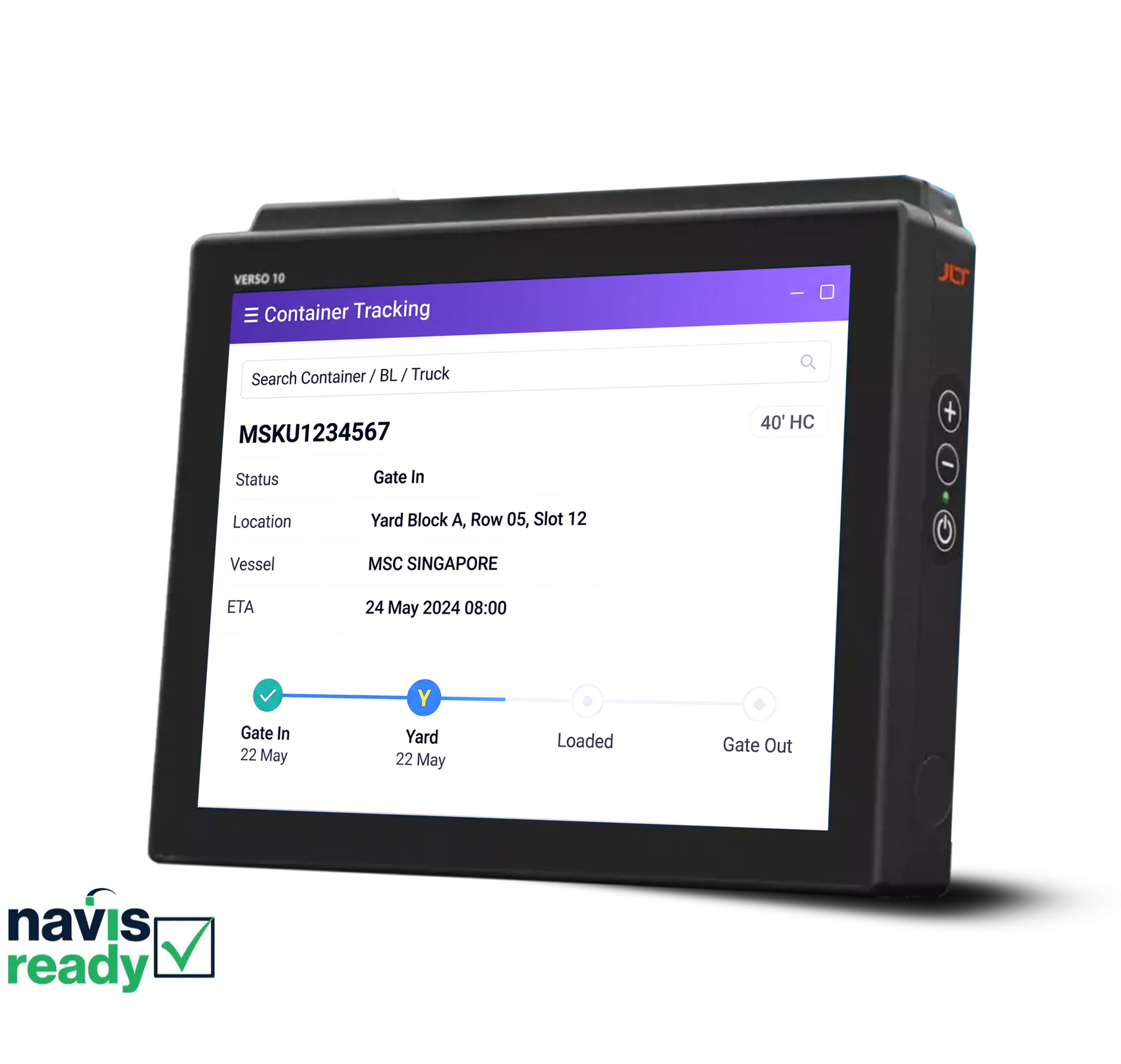
Vehicle-mounted terminals are built for salt air, extreme temperatures, and constant vibration — validated for Kaleris N4 TOS — because in your environment, operational certainty is non-negotiable.
Container terminals rely on heavy equipment such as straddle carriers, reach stackers, and terminal tractors to move containers efficiently. JLT’s rugged vehicle-mounted computers installed in these vehicles provide operators with real-time job instructions from the terminal operating system, enabling accurate container moves and continuous yard productivity.
Cranes and yard cranes require reliable access to container information, load plans, and job assignments. Industrial computers for port environments allow crane operators to view container data, confirm moves, and update terminal systems in real time, helping improve handling accuracy and vessel turnaround times.
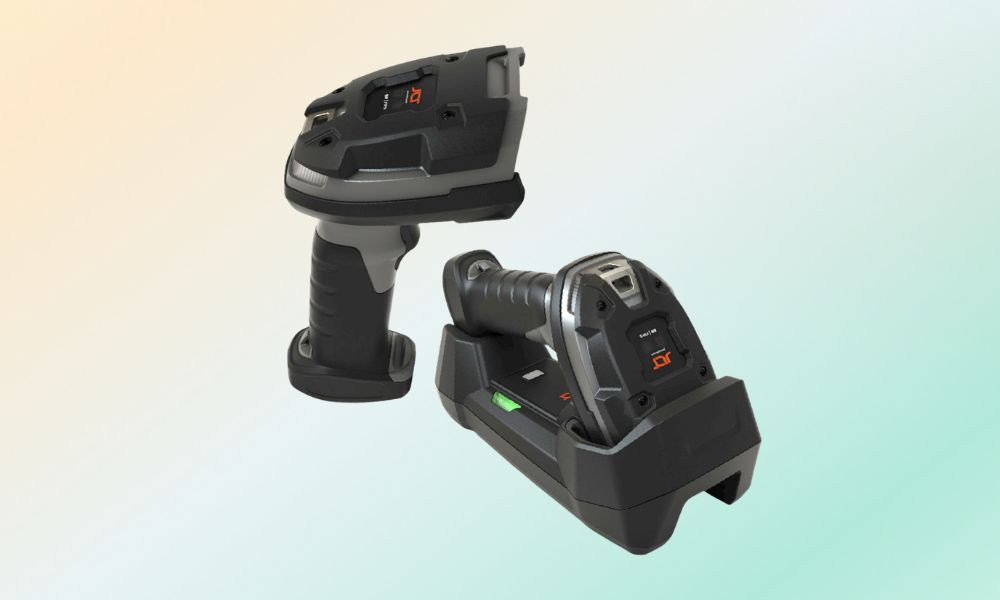
At terminal gates, workers must quickly verify container IDs, driver credentials, and shipment information. JLT’s rugged outdoor terminals help gate staff scan container numbers, capture documentation, and update the terminal operating system instantly, reducing delays and improving truck turnaround times.
Port yards require regular inspections of containers, chassis, and terminal equipment. JLT’s Forklift- mounted industrial devices allow workers to record inspection data, capture images, and report maintenance issues directly from the yard—even in harsh weather or bright sunlight.
Maintaining accurate container location data is critical for efficient terminal operations. JLT’s container terminal computers help workers scan container IDs and update inventory status in real time, improving yard visibility and reducing time spent searching for containers.
Port operations depend on constant coordination between operators, supervisors, and logistics teams. Connected rugged devices for terminal operations enable reliable communication and data access across the terminal yard, supporting faster decision-making and more efficient cargo handling.
Why leading companies choose JLT
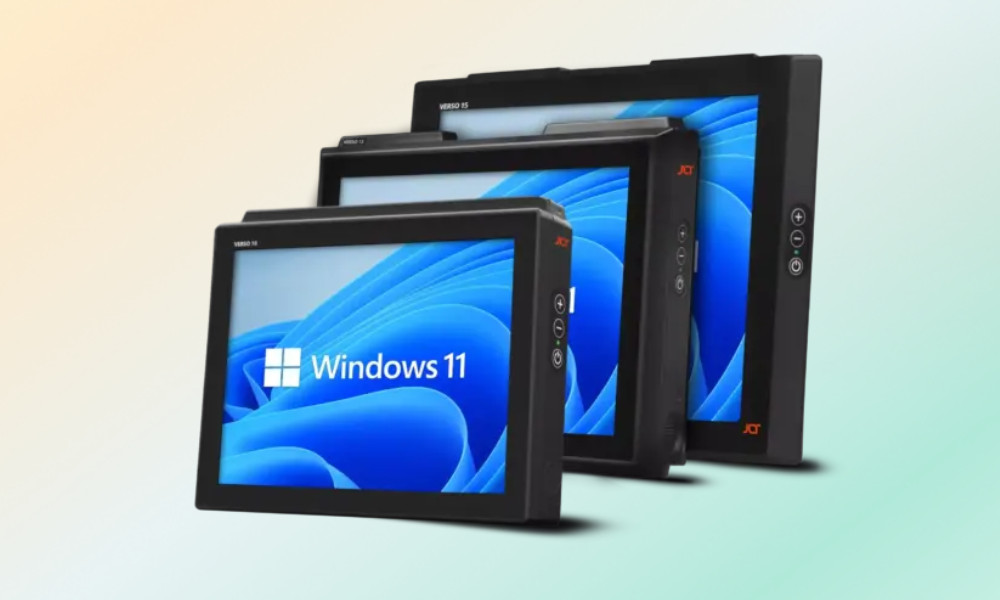
When your terminal runs on Kaleris N4, integration risk is real. JLT’s VERSO series delivers reliable port terminal computing solutions trusted by container terminals worldwide. Designed specifically for demanding port operations technology, our container terminal computers integrate smoothly with leading terminal operating systems, helping operators keep cargo moving efficiently.
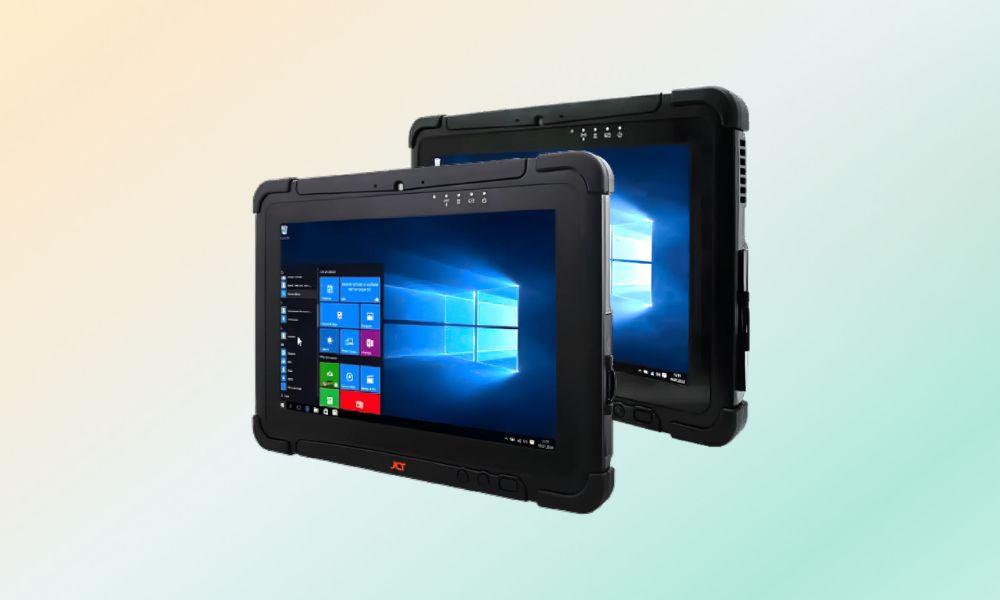
Ports are among the harshest IT environments. JLT designs industrial-grade rugged port terminals engineered for vibration, heavy equipment use, and exposure to salt air. These corrosion-resistant industrial computers are built to perform reliably in demanding marine environments and coastal terminals.
Frequent device replacement drains budgets and disrupts operations. JLT’s industrial-grade rugged computers are built to last. Purpose-built for harsh port environments from day one, and continuously upgraded in-house, you get lower total cost of ownership hardware without ever sacrificing performance.
Operators in open yard environments need industrial displays that remain clear in direct sunlight. JLT rugged devices feature sunlight-readable industrial displays and high-brightness screens designed for outdoor yards, along with reliable connectivity that supports connected port terminals, real-time decision-making, and efficient cargo handling.
JLT rugged outdoor terminals are designed around how your workforce actually works, ergonomic controls, glove-friendly displays, flexible mounting for any vehicle cab. Across yard terminal computing and every role in your operation, your team moves faster with less fatigue and fewer errors.
When terminal systems stop, cargo stops moving. JLT rugged computing solutions are engineered to deliver dependable performance in demanding port environments, helping terminals maintain uptime, protect throughput, and keep total technology costs predictable.
Power your container terminal with JLT rugged computers to boost productivity and throughput. Built for extremes and Navis Ready, they deliver reliable performance, seamless TOS integration, and continuous logistics operations.
We’re here to help and advise you on every aspect of rugged devices and industry data communications.
Please fill in the form and we will get back to you as soon as possible.
Insights and expertise from the world of rugged computing
In today’s fast-moving industrial, logistics, and supply chain environments, rugged Vehicle-Mounted Terminals (VMTs) do far more than display information
For decades, the stationary floor scale has been a fixture in LTL terminals. But in today’s high-velocity logistics world, this manual process is a costly bottleneck.
“The service and speed we get with JLT has surprised us. They can deliver faster than local suppliers and go the extra mile to make sure we get the best value for our investment”
Insights and expertise from the world of rugged computing
When a forklift terminal loses connectivity mid-pick in cold storage, a port crane computer fails during peak vessel operations, or a plant floor device cracks under constant vibration, the cost is never the device—it’s the operational downtime, stalled workflow, missed SLA, and cascading disruption that follows every computing failure in an environment that cannot afford…
When an industrial operation deploys the wrong computing hardware—a consumer tablet in a cold storage facility, a standard laptop in a crane cab, or a generic device on a manufacturing floor—the failure is not a surprise. It is the predictable outcome of deploying technology never designed for the environment it is operating in. Rugged technology…
When a crane computer fails mid-lift at a container terminal, a reach stacker terminal loses connectivity during peak throughput, or a gate processing system goes down during vessel operations, the cost isn’t the device—it’s the stalled container movement, delayed vessel departure, cascading yard disruption, and TEU throughput loss that compounds with every minute down. Container…