
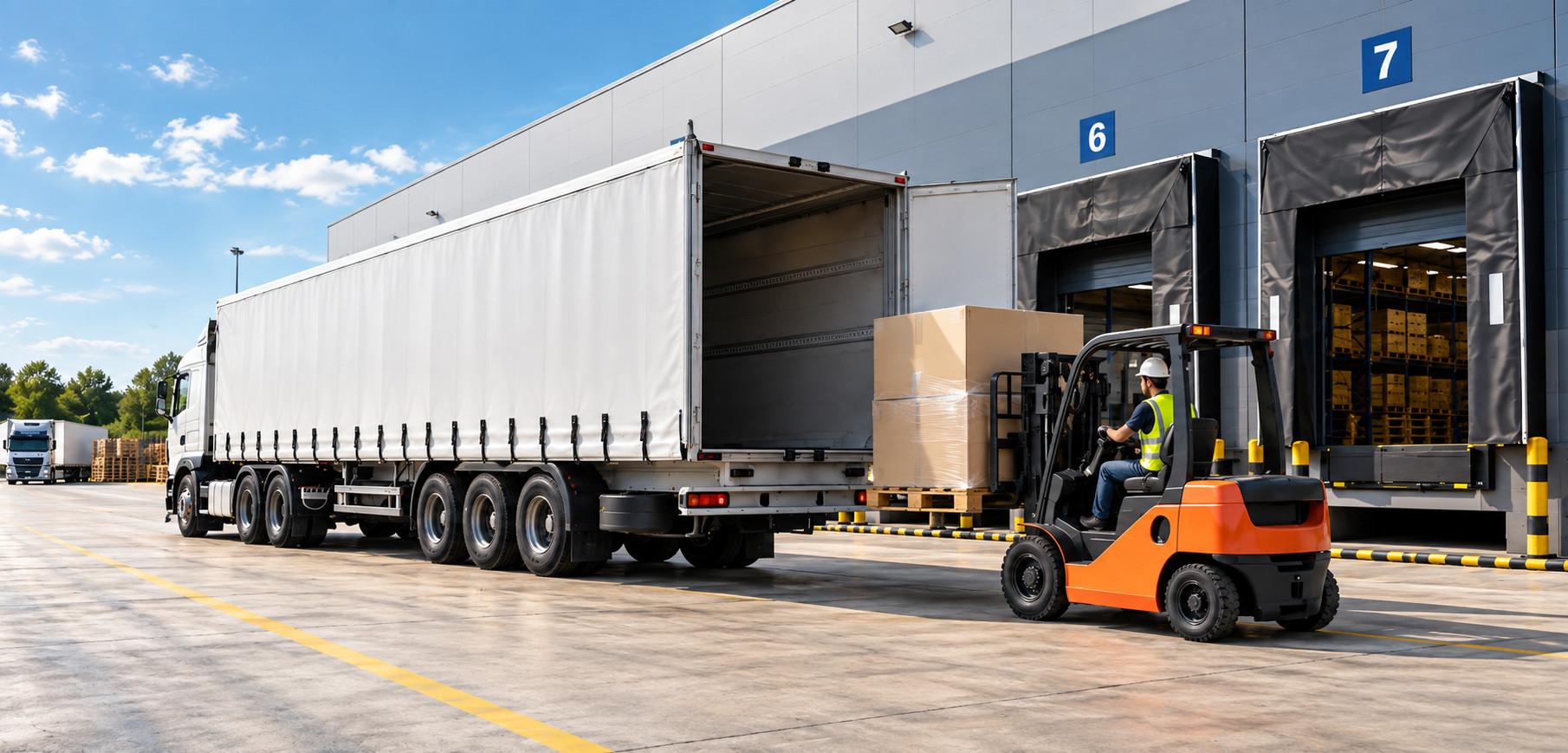
Supply chain performance is tracked at the boardroom level but determined on the warehouse floor, the port quayside, the manufacturing line and the cold store aisle. Strategies and systems matter, but the decisions that determine whether an order ships on time, whether a vehicle is available at the start of a shift, and whether an operator has the right information at the right moment are made in seconds, at the point of work, by people and equipment that either perform reliably or do not.
This guide examines where supply chain operations are genuinely built and broken, what connects operational execution to strategic outcomes, and how industrial operations can close the gap between what their systems plan and what their frontline delivers.
JLT Mobile Computers designs and engineers rugged computing hardware purpose-built for warehouses, ports, manufacturing facilities, cold storage operations and mining sites, where operational continuity directly determines supply chain outcomes.
See how JLT’s rugged computing hardware supports industrial operations.
Supply chain performance starts on the frontline
Why frontline operations drive supply chain performance
Supply chain performance is a composite result built from thousands of individual operational moments: a pallet confirmed in the right location, a vehicle ready at the start of a shift, and a dispatch completed without error. Each is invisible when it goes right and expensive when it goes wrong.
The systems that plan and coordinate supply chains, including WMS, ERP, and TMS platforms, depend entirely on the accuracy and timeliness of what happens at the point of execution. A WMS can direct a pick to the right aisle, but it cannot guarantee the operator received the instruction, confirmed the correct item, or recorded the movement accurately. That last step, frontline execution, is what separates a plan from an outcome.
This is why technology decisions made at the operational level have supply chain consequences beyond the immediate task. A device that loses its wireless connection mid-pick does not just slow one operator. It creates a gap in the data the WMS is acting on, which means subsequent decisions about replenishment, dispatch sequencing, and inventory positioning are made on information that no longer reflects reality.
The hidden cost of operational disruptions
The visible costs of operational disruption are straightforward: a repair bill, an overtime shift, a short-term equipment hire. The less visible costs are consistently larger.
When a device fails mid-shift, the operator stops. The task remains incomplete in the system. Other tasks that depend on that completion queue behind it. A supervisor spends time troubleshooting rather than managing throughput. If the failure is in a critical path, such as receiving, dispatch or a picking lane feeding a live order, the disruption propagates forward into delivery performance and customer commitments.
The same pattern applies to process failures. A missed inspection that puts a defective vehicle into operation, a manual data-entry error that corrupts inventory counts, a paper-based workflow where a defect report stays in a folder rather than triggering a maintenance response: each is small individually but compounds in aggregate. Supply chain resilience is built through operational continuity at every step, not through recovery efforts at the end of the chain.
Where supply chain performance breaks down
Limited operational visibility
Visibility means having an up-to-date view of asset locations, equipment condition, and workflow progress across the site. Without that insight, management is forced into a reactive approach, with issues often identified only after they have already affected throughput.
The visibility gap in industrial operations is often not a technology gap. The data exists in vehicle hour meters, WMS task logs, inspection records, and scan confirmations. The gap is in how that data reaches the people who can act on it and how quickly. Data reviewed weekly in a spreadsheet is not operational visibility. Data that surfaces an anomaly as it develops is.
Consequences compound over time: fleet size decisions made on estimates rather than utilization data, maintenance scheduled on calendar intervals rather than equipment condition, and staffing based on historical patterns rather than current demand. Each is a decision made with less information than the operation already holds.
Disconnected systems and manual workflows
Most operational disruptions do not start with hardware failure. They start with a process that requires information to travel between systems manually, through re-entry, transcription, or summarization, and loses accuracy or timeliness in transit.
A warehouse running its WMS, maintenance records, safety logs and vehicle tracking on separate platforms that do not communicate is not running four systems. It is running four partial pictures of the same operation and relying on people to stitch them together. The process consumes valuable time, increases the likelihood of errors, and leaves decision-makers working with information that is already out of date.
Manual workflows carry the same structural problem. A pre-shift inspection completed on paper is a safety record, not an operational input. The information it contains, including defects found and equipment cleared or withheld, does not reach the maintenance queue or the utilization report unless someone physically transfers it. By that point, the opportunity to act preventively has often passed.
Equipment downtime and workforce pressure
Equipment downtime in industrial environments is rarely a single event. It is a pattern of smaller failures: a terminal that drops its wireless session repeatedly, a scanner requiring multiple attempts to read a label, a display unreadable in direct sunlight. These accumulate into lost time before anyone names them as a problem.
The pressure this creates on frontline teams is consistently underestimated. When technology does not perform reliably, operators develop workarounds: carrying paper as backup, re-entering data already captured, and batching transactions rather than confirming in real time. These workarounds absorb productive time, introduce error, and erode the process discipline that digital workflows depend on. Over time, the workaround becomes the process, and the data quality that operational visibility relies on degrades with it.
Equipment reliability and workforce productivity are not separate issues. They are the same issue approached from two directions.
Connecting operations for better supply chain performance
Connected systems and real-time data at the point of work
Connected operations means data generated at the point of work, including scan confirmations, vehicle fault codes, completed inspections and dispatch records, reaches the systems that need to act on it immediately and without manual intervention. The pick confirmation that updates inventory. The fault code that creates a maintenance task. The inspection result that clears a vehicle for the next shift.
Real-time data at the point of work is what makes the rest of the supply chain’s systems accurate. A transport management system routing outbound shipments works on inventory and dispatch data that is only as current as the last confirmed transaction. The speed and accuracy of that data depends on what happens at the operational level, which depends on whether the people doing the work have equipment that captures and transmits reliably.
The principle holds across environments. In a warehouse, it is the forklift operator confirming a putaway. In a port, it is the reach stacker operator recording a container movement. In a manufacturing facility, it is the line replenishment operator confirming a material delivery. Different tasks, same dependency: the enterprise system is only as good as the information that reaches it from the frontline.
Standardized workflows and integrated operations
Standardization determines what a process is and how it is captured. Integration determines where that data goes and what happens to it. Together, they address both sides of the disconnected-systems problem.
Standardized workflows produce consistent, structured records regardless of which operator completes a task or which shift it falls on. When a comparison is made between two sites, two shifts, or two equipment types, the data is comparable rather than interpreted.
Integration means those records connect directly to the systems that act on them: a defect raises a maintenance task, a throughput shortfall flags a staffing review, a scan confirmation updates inventory in real time. The combination removes the human relay between data capture and data use, replacing it with a direct connection that is faster, more consistent, and less prone to loss.
Why rugged devices are critical to supply chain continuity
Industrial-grade reliability across demanding environments
Consumer and commercial-grade devices fail in industrial environments, not because they are low quality, but because they were never designed for those conditions. The standards that govern rugged hardware exist for precisely this reason. MIL-STD-810 covers resistance to shock, vibration, and temperature extremes. IP rating classifications define protection against dust and moisture ingress. A warehouse, port, or mine is not a more demanding version of an office. It is a different operating context entirely.
Vibration from forklift travel over concrete joints is continuous. Temperature cycling in cold storage creates condensation inside enclosures not built for the transition. Dust in manufacturing and mining is abrasive and electrically conductive. Washdown in food and pharmaceutical facilities requires sealed hardware that can be cleaned without damage. In each case, a device not specified for the environment fails earlier, more often, and at unpredictable moments. The cost is not the device. It is the operational disruption that follows.
Connected mobile workers and reliable data capture
The value of a connected workforce depends on the connection being maintained. In industrial facilities, including steel-framed buildings, cold stores, outdoor yards and underground workings, wireless coverage is neither uniform nor guaranteed. Devices roaming between access points must maintain their application session without dropping the transaction in progress. A scan confirmation lost mid-operation is not a missed record. It is an inventory discrepancy that may not surface until a physical count.
Barcode scanning and RFID capture are the primary inputs for inventory and movement data that supply chain systems depend on. Integrated barcode imagers on vehicle-mounted devices confirm location, quantity, and identity at the point of work without a separate handheld or manual entry step. RFID adds throughput for high-volume capture: full pallet reads at dock doors, container reads at port gates, and asset tracking for returnable containers, without requiring line-of-sight or individual item handling.
For a detailed look at how vehicle-mounted computing supports these requirements, see Rugged Industrial Computers for Vehicles: Use Cases, Specs and ROI.
See the industries JLT supports across warehousing, ports, manufacturing and more.
From operational data to supply chain intelligence
Measuring the kpis that matter most
Supply chain performance is only improvable once it is measurable, and measurement depends on consistent, automated data capture. A workable KPI set at the operational level covers five areas:
- Inventory accuracy: the gap between system records and physical stock, measured through cycle counts and exception rates. The primary driver of order accuracy and replenishment reliability.
- Order cycle time: elapsed time from order receipt to dispatch confirmation, affected by pick rates, equipment availability, and staging efficiency.
- Equipment uptime: the proportion of scheduled operating time that key assets are available and functioning. The most direct measure of operational continuity.
- Labor productivity: movements, picks, or pallets handled per operator hour, measured by shift and zone to reveal where capacity is under- or over-deployed.
- On-time delivery: the percentage of orders dispatched within the committed window, the downstream result that all upstream metrics are working toward.
KPIs that depend on manual reporting are always incomplete and always late. The decisions they inform are always slightly behind the operation they are supposed to be managing.
Turning operational data into better decisions
Operational data becomes intelligence when it drives a decision that would not otherwise have been made. A dashboard showing yesterday’s equipment utilization is a report. A system that flags a unit whose fault pattern indicates a developing failure before the shift begins is intelligence.
The transition from reporting to intelligence depends less on analytical sophistication than on data consistency. Pattern recognition across a fleet only produces reliable outputs when input data is structured, complete, and captured the same way every time. This is why standardization and integration are prerequisites for operational intelligence rather than separate initiatives.
JLT Insights, JLT’s real-time operational data platform, surfaces vehicle-level data across a fleet in a form that supports maintenance decisions, utilization analysis, and operator management. It works because the underlying data is captured consistently through in-vehicle hardware rather than compiled manually at the end of a shift.
Building a culture of continuous improvement
Technology enables continuous improvement but does not produce it. A pre-shift inspection that consistently finds the same defect on the same equipment type is telling the maintenance program something. A throughput shortfall appearing in the same zone at the same time each shift is telling workforce planning something. Impact events clustering around one aisle are telling the layout something.
None of these signals produce improvement automatically. They require someone to read them, act on them, and change something as a result. The organizations that improve supply chain performance consistently are those where operational data reaches decision-makers quickly enough to be useful and where acting on it is part of the normal workflow rather than a special project.
Your text here
How JLT Supports Connected Supply Chain Performance
JLT Mobile Computers has spent over three decades building rugged computing hardware for the warehouses, ports, manufacturing facilities, and cold storage operations that supply chains run through. Whether you are dealing with device reliability issues, disconnected systems, or limited operational visibility, the JLT team can help identify the right computing solution for your environment.
Ready to improve operational continuity in your facility?
Key takeaways
Supply chain performance is determined at the operational level. Execution at the frontline, through accurate data capture, reliable equipli>ment, and connected workflows, determines whether strategic plans become outcomes.
Disconnected systems, limited visibility, and equipment downtime are the most common and most costly disruptors. Each is addressable through integration, standardized workflows, and hardware specified for the environment.
Rugged devices remove device failure as a cause of operational disruption. In industrial environments, this is not a marginal improvement. It is the difference between a connected operation and one permanently playing catch-up.
Operational data only becomes supply chain intelligence when it is consistent, timely, and connected to the decisions it should be informing.
Continuous improvement is a cultural outcome built on operational data. Technology creates the conditions; the organization determines whether they are used.