
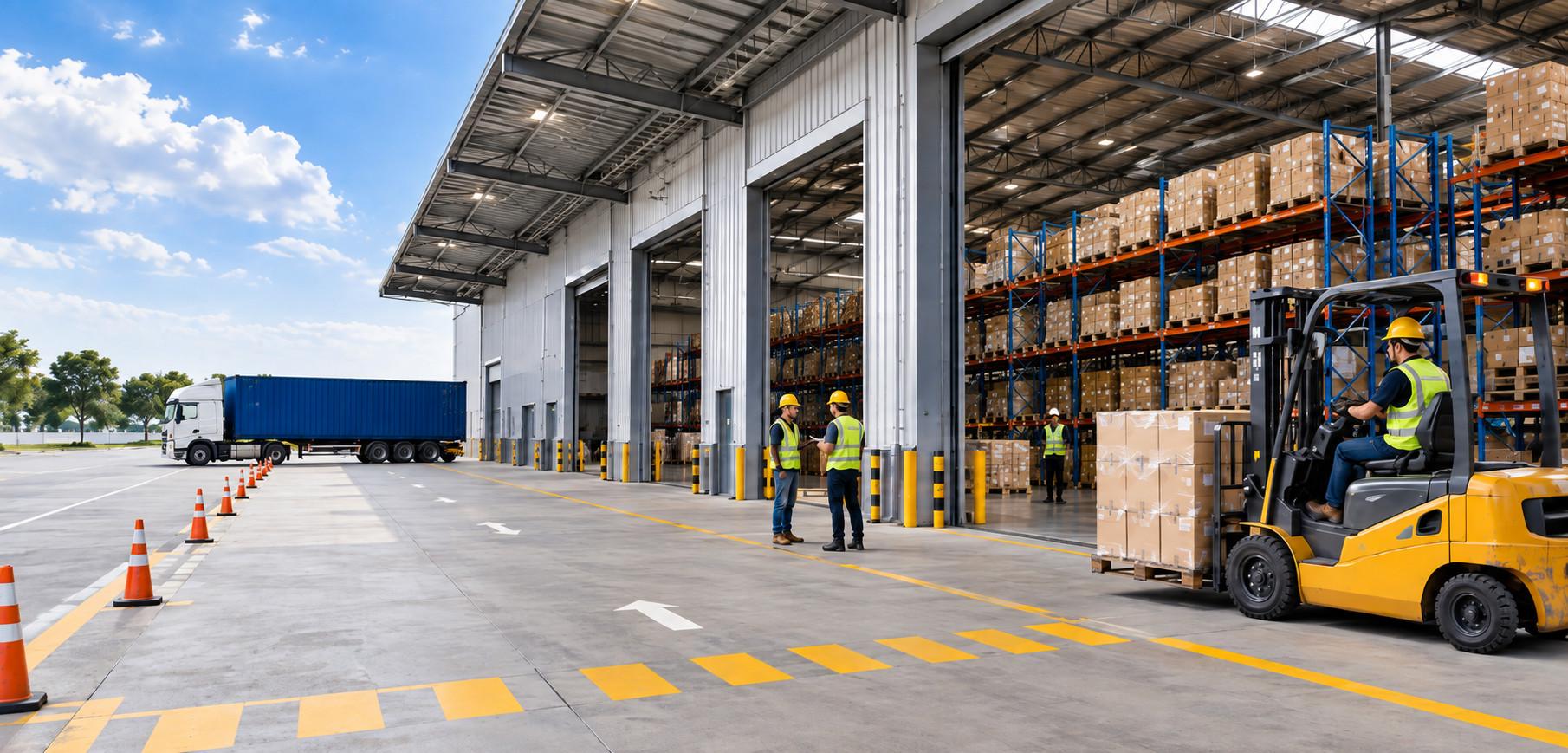
Warehouses, distribution centers, ports, and logistics yards are among the most demanding work environments in modern industry. Forklifts, heavy equipment, pedestrian traffic, tight deadlines, and around-the-clock operations create risks that cannot be managed through generic workplace safety advice alone.
At JLT Mobile Computers, we’ve spent more than 30 years helping industrial organizations improve operational continuity in demanding environments. Through our experience supporting warehouses, ports, manufacturing facilities, and logistics operations worldwide, we’ve seen that the safest organizations don’t rely on luck—they build safety into their everyday operations.
The organizations with the strongest safety records don’t simply remind employees to “be careful.” They identify where incidents occur, understand why they happen, and continuously improve processes, training, and technology to reduce risk. This article explores practical workplace safety tips that help warehousing and logistics teams create safer operations without compromising productivity.
Why generic safety tips don’t work for warehousing & logistics teams
The scale of the problem
Osha forklift fatality/injury data
Forklifts are essential to warehouse operations, but they also present significant workplace hazards. According to OSHA, forklift-related incidents result in thousands of injuries and dozens of fatalities in the United States each year. Many of these incidents involve collisions, tip-overs, falling loads, or pedestrian strikes — events that can often be prevented through better operational practices and improved visibility. While operator training is mandatory, training alone cannot eliminate every risk. Organizations must also evaluate traffic flow, equipment condition, operator behavior, and workplace design to reduce the likelihood of incidents.
Bls warehouse injury figures
The U.S. Bureau of Labor Statistics (BLS) consistently reports that warehouse and transportation workers experience higher injury rates than employees in many other industries. Common injuries include:
- Slips, trips, and falls
- Musculoskeletal disorders from repetitive lifting
- Forklift and vehicle-related incidents
- Contact with moving equipment
- Struck-by and caught-between accidents
As warehouses continue to increase throughput to meet growing customer expectations, balancing productivity with workplace safety becomes more important than ever.
Where warehousing risk differs from office or generalist workplace risk
Warehouse and logistics operations present a unique combination of hazards rarely found in traditional workplaces. Employees often work alongside:
- Moving forklifts and industrial vehicles
- Heavy palletized loads
- Narrow aisles and blind intersections
- Loading docks and trailers
- Outdoor yards exposed to changing weather conditions
- 24/7 operations with rotating shifts
Unlike office environments, where many risks are relatively static, warehouse conditions change throughout the day. Inventory locations shift, vehicle traffic fluctuates, and operators constantly make decisions while moving through busy work areas. This dynamic environment requires proactive safety management, not simply compliance with basic workplace rules.
Why “common sense” tips alone don’t move the needle
Safety often depends on habits rather than knowledge.
Most experienced operators already understand the importance of driving carefully or watching for pedestrians. Yet incidents still occur because risks are not always obvious in real time.
Near misses, recurring congestion points, visibility limitations, equipment issues, and fatigue often develop gradually before leading to a serious incident.
Organizations that rely only on “common sense” may overlook these warning signs.
The most effective safety programs combine:
- Regular training
- Routine equipment inspections
- Operational data
- Incident reporting
- Continuous process improvement
By using data to understand what is actually happening on the warehouse floor, safety managers can focus resources where they have the greatest impact.
Core safety tips for forklift & vehicle operations
Forklift safety remains one of the most important aspects of warehouse operations because vehicles interact constantly with both people and inventory.
Pedestrian and traffic separation
One of the most effective ways to reduce workplace incidents is to minimize interactions between pedestrians and industrial vehicles.
Marked walkways, mirrors, and horn use at intersections
Facilities should establish clearly defined traffic management plans that include:
- Marked pedestrian walkways
- Dedicated forklift travel lanes
- Clearly identified crossing zones
- Convex mirrors at blind corners
- Mandatory horn use at intersections
- Clearly posted speed limits
Physical barriers, warning signage, and floor markings help reinforce safe behaviors while reducing confusion during busy operations.
Even small improvements in traffic flow can significantly reduce collision risks.
Load handling and stability
Improperly secured loads increase the likelihood of tip-overs, falling materials, and equipment damage.
Center of gravity, load capacity charts, and even distribution
Operators should always remember that every forklift has a rated load capacity based on its design. Safe load handling includes:
- Following manufacturer load capacity charts
- Keeping loads low during travel
- Evenly distributing weight across both forks
- Avoiding sudden acceleration or braking
- Maintaining awareness of the forklift’s center of gravity
Overloaded or poorly balanced loads increase the likelihood of tip-overs, dropped materials, and equipment damage, especially when operating on ramps or uneven surfaces.
Reducing driver distraction at the point of highest risk
Driver distraction is becoming an increasingly important safety consideration as vehicle-mounted technology becomes more common.
Screen-blanking technology
As industrial vehicles become more connected, reducing driver distraction is an increasingly important aspect of workplace safety.
JLT Mobile Computers introduced an AI-powered screen blanking solution in 2025 as part of the launch of the JLT6015. The technology is designed to help improve safety in industrial environments by reducing unnecessary screen distraction while operators are driving, allowing them to maintain greater focus on their surroundings.
This illustrates how technology can complement operator training and established safety procedures—supporting safer behaviors rather than replacing them.
Operator training and certification
Operator certification is essential—but it is only the beginning.
Why certification alone isn’t enough
Even experienced operators can develop unsafe habits over time, particularly during periods of high workload or staffing shortages.
Organizations should reinforce safe behaviors through:
- Regular refresher training
- Supervisor observations
- Coaching after near misses
- Daily pre-shift discussions
- Ongoing performance feedback
The strongest safety cultures view training as a continuous process rather than a one-time certification requirement.
Safety tips for warehouse, port & distribution environments
Housekeeping and hazard elimination
Small hazards often create large consequences in busy facilities.
Debris, lighting, and floor condition
Routine inspections should focus on identifying hazards such as:
- Loose shrink wrap or packaging materials
- Damaged pallets
- Oil or hydraulic fluid leaks
- Uneven flooring
- Poor lighting
- Blocked emergency exits
Promptly addressing these issues reduces the likelihood of slips, trips, falls, and vehicle incidents while creating a safer environment for everyone.
Ppe and daily equipment inspections
Personal protective equipment remains essential, but only when used consistently and correctly. Daily inspections should verify that forklifts, scanners, brakes, lights, warning alarms, tires, and batteries are functioning properly before operations begin. Detecting problems early prevents larger failures during critical tasks.
Managing fatigue and shift-based risk in 24/7 operations
Long shifts, night operations, and repetitive work increase fatigue-related risk.
Organizations can reduce fatigue by:
- Scheduling appropriate rest breaks.
- Rotating physically demanding tasks.
- Monitoring overtime.
- Encouraging reporting when workers feel fatigued.
- Designing realistic productivity expectations during overnight shifts.
Fatigue management supports both safety and operational performance.
Ergonomics and device comfort as a safety factor
Ergonomics is often overlooked as part of workplace safety.
Adjustable mounting and comfortable devices
Poorly positioned equipment forces operators to repeatedly adjust their posture, increasing physical strain and reducing awareness of their surroundings.
JLT designs rugged computing solutions specifically for industrial vehicles, where limited cabin space and long operating hours demand ergonomic equipment placement.
Features such as:
- Adjustable mounting systems
- Appropriately sized displays for different vehicle cabins
- Hands-free handheld options
- Easy-to-read screens
help reduce operator fatigue while allowing workers in warehouses, ports, and yard logistics operations to remain focused on their environment.
The role of real-time data & connected devices in modern safety tips
From paper checklists to real-time inspection and incident data
Digital inspection workflows provide immediate visibility into equipment condition, maintenance needs, and recurring safety concerns.
Instead of waiting for paper forms to be reviewed, supervisors can respond quickly when inspections identify potential hazards.
How vehicle-dynamics data supports faster, targeted response
Learning from operational data
Modern rugged vehicle-mounted computers equipped with built-in accelerometers can detect hard braking, sudden impacts, sharp turns, and other significant vehicle events.
When aggregated across an operation, this information helps identify recurring hotspots by operator, shift, vehicle, or facility location. Similar approaches have been demonstrated in projects where vehicle-dynamics data supported operational analysis for a Scandinavian truck manufacturer, enabling targeted improvements rather than relying on assumptions.
The objective is not surveillance but continuous improvement through better visibility into operational patterns.
Why device reliability matters in safety-critical moments
Reliable devices reduce operational risk
Technology should support operators—not create additional distractions.
Features such as:
- Glove-compatible touchscreens
- Sunlight-readable displays
- Rugged construction without protruding components
- Resistance to drops, dust, vibration, and moisture
help ensure workers can access critical information reliably in demanding environments. When devices remain dependable throughout a shift, operators spend less time troubleshooting equipment and more time focusing on safe operations.
At JLT, rugged computing solutions are purpose-built for demanding industrial environments where reliability, usability, and long product lifecycles are essential. By helping operators stay focused on their work rather than their equipment, reliable devices can support both productivity and safer day-to-day operations.
Building a practical safety-tip checklist for your site
Step 1 — map your top hazards by role
Different employees face different workplace hazards.
Consider role-specific risks such as:
| Role | Common Hazards |
| Forklift Operator | Vehicle collisions, blind intersections, load instability |
| Order Picker | Repetitive lifting, slips and falls, falling objects |
| Dock Worker | Trailer movement, loading hazards, pedestrian traffic |
| Yard Driver | Weather conditions, reversing, vehicle interaction |
By identifying the highest-risk activities for each role, organizations can focus their safety efforts where they will have the greatest impact.
Step 2 — pair each hazard with a behavior, training point, and supporting technology
For every identified risk, define:
- The safe behavior expected
- Required training
- Engineering controls
- Appropriate technology or operational data that can reinforce safe practices
This creates multiple layers of protection rather than relying on a single solution.
Step 3 — review tips against real incident data
Safety programs should evolve continuously. Review incident reports, near misses, inspection findings, and operational trends regularly. If recurring issues appear, update procedures, facility layouts, or training rather than assuming employees simply need more reminders.
Want to go deeper on forklift-specific standards and compliance?
Understanding workplace safety best practices is only one part of the picture. Organizations should also stay informed about applicable regulations, operator requirements, and evolving technologies.
Frequently asked questions
What are the most important workplace safety tips for warehouse employees?
What are the most common causes of warehouse accidents?
What are the most important safety tips for forklift operators?
How can employers improve workplace safety in logistics operations?
Why is PPE important in warehouse environments?
How often should warehouse safety procedures be reviewed?
How can technology support (not replace) workplace safety training?
How do connected devices improve workplace safety?
What role does real-time operational data play in reducing workplace incidents?
How can businesses build a stronger workplace safety culture?
What should be included in a warehouse safety checklist?
How do rugged mobile computers support safer warehouse operations?
Conclusion
Creating a safer warehouse isn’t about implementing a single solution—it’s about building a culture of continuous improvement. The most successful warehouse and logistics operations combine well-trained employees, standardized processes, effective traffic management, regular inspections, and operational visibility to reduce risk over time.
At JLT Mobile Computers, we’ve worked alongside industrial organizations for more than three decades, helping customers improve operational continuity in warehouses, ports, manufacturing facilities, and logistics operations. While technology alone cannot prevent workplace incidents, reliable rugged computing solutions, connected operational data, and innovations such as AI-powered Screen Blanking can support organizations in creating safer, more efficient workplaces.
By continuously evaluating risks, learning from operational data, and reinforcing safe behaviors, businesses can protect both their people and their productivity.