
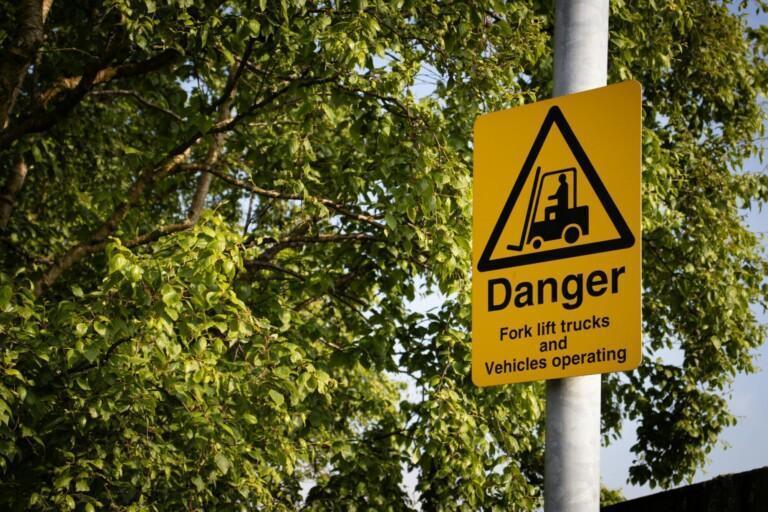
Forklifts are essential for warehouses, manufacturing facilities, logistics operations, ports, and other industrial environments. They help businesses move materials efficiently, but they can also create serious risks when vehicles, loads, pedestrians, and operators share the same work area.
Following established safety standards helps organizations create safer material-handling operations while supporting productivity and regulatory compliance. Effective forklift safety involves trained operators, regular inspections, appropriate load handling, traffic controls, equipment care, and clear safety procedures.
Technology can further support these practices. Rugged vehicle-mounted computers, tablets, scanners, and connected software can help operators complete inspections, access instructions, communicate with supervisors, record incidents, and manage daily tasks from the point of work.
For organizations managing forklift fleets, combining proven safety practices with reliable industrial technology can create more consistent processes and better visibility across daily operations.
Why forklift safety standards matter
Forklift incidents can result in injuries, damaged products, equipment downtime, and disruption to normal operations. Common hazards include vehicle collisions, tip-overs, falling loads, restricted visibility, and interactions between forklifts and pedestrians.
A strong safety program addresses these risks through a combination of training, equipment inspections, safe driving practices, facility controls, and ongoing supervision.
Key areas include:
- Operator training and authorization
- Pre-shift forklift inspections
- Load capacity and stability
- Safe travel speeds
- Pedestrian awareness
- Designated vehicle and pedestrian routes
- Parking and shutdown procedures
- Equipment care
- Incident reporting
- Ongoing safety reviews
Requirements vary according to jurisdiction, vehicle type, industry, and environmental conditions. In the United States, organizations should consult applicable OSHA requirements and other relevant regulations when developing their safety programs.
Technology does not replace regulatory requirements or established safety practices. Instead, it can help make those practices easier to execute, document, and monitor.
Key forklift safety requirements
An effective forklift program brings together qualified operators, suitable equipment, clear procedures, and appropriate supervision.
Training and authorization
Only properly trained and authorized personnel should drive powered industrial trucks. Training should reflect the equipment and conditions workers encounter during normal operations.
Operators should understand topics such as:
- Vehicle controls and operating characteristics
- Load handling and stability
- Capacity limitations
- Safe travel practices
- Visibility restrictions
- Pedestrian interaction
- Surface and environmental hazards
- Parking and shutdown procedures
Digital systems can support training and daily operations by giving operators access to work instructions, applications, and relevant information directly from the vehicle.
Pre-shift forklift inspections
Inspections help identify potential problems before equipment enters active operation. Depending on the vehicle and application, inspection points can include brakes, steering, tires, forks, controls, lights, warning devices, and other critical components.
Digital inspection checklists can replace paper-based forms and make results easier to record, review, and track.
A forklift driver can complete a checklist from a vehicle-mounted computer at the beginning of a shift. If an issue is identified, the information can be routed to the appropriate team for follow-up.
This creates a more consistent process while giving supervisors better visibility into equipment conditions.
Safe load handling
Every forklift has specific capacity and use limitations. Loads should remain within the vehicle’s rated capacity and be positioned securely to maintain stability.
Operators should also consider:
- Load weight
- Load dimensions
- Load distribution
- Visibility
- Travel conditions
- Fork positioning
- Overhead clearance
Digital work instructions and warehouse applications can help users access task information while working, provided that the underlying system and procedures are appropriately designed.
Traffic and pedestrian safety
Warehouses and industrial facilities can contain complex traffic patterns involving forklifts, pedestrians, trucks, and other equipment. Facility design and traffic management therefore play an important role in reducing potential interactions.
Organizations can establish designated routes, pedestrian areas, signage, visibility controls, communication procedures, and speed controls appropriate to their facilities.
Connected systems can also provide operational information that helps teams coordinate activities and maintain awareness of work across different areas.
How technology supports forklift safety
Industrial technology can turn documented safety procedures into repeatable digital workflows.
Vehicle-mounted computers, rugged tablets, handheld scanners, software applications, and connected systems can support:
- Digital vehicle inspections
- Operator identification
- Task instructions
- Work orders
- Equipment reporting
- Incident documentation
- Inventory information
- Location data
- Communication
- Digital records
- Safety-related workflows
For example, a forklift driver can use a rugged computer to complete a pre-operation checklist before beginning a shift. Results can be captured digitally and made available to the appropriate supervisor or support team.
This reduces manual paperwork and keeps important information closer to the point where the work takes place.
Technology can also connect information from different processes. Inspection results, task information, equipment records, and incident reports can become part of a broader operational information flow.
Why rugged technology matters on forklifts
A forklift is a demanding environment for computing equipment. Vehicle-mounted systems may encounter vibration, shock, dust, moisture, temperature changes, impacts, and extended use.
Standard office equipment may not be designed for these conditions. A device that becomes unreliable during a shift can interrupt digital workflows and make important information less accessible.
Purpose-built rugged computers are designed for demanding industrial applications. Depending on the model and environmental conditions, organizations may need to consider:
- Vibration and shock resistance
- Protection from dust and moisture
- Wide temperature ranges
- Sunlight-readable displays
- Reliable wireless connectivity
- Secure vehicle mounting
- Compact form factors
- Long product lifecycles
- Industrial software compatibility
The appropriate configuration depends on the vehicle, application, facility, connectivity requirements, and expected lifecycle.
Improving visibility with real-time data
Connected technology can make operational information available when and where it is needed.
When inspections, tasks, equipment information, and other activities are captured digitally, supervisors can gain greater visibility across the facility.
This can help organizations:
- Monitor inspection completion
- Identify recurring equipment problems
- Track support requirements
- Coordinate tasks
- Maintain consistent records
- Identify process bottlenecks
- Review incidents and near misses
- Support continuous improvement
The benefit does not come from collecting data alone. Information needs to be connected to clear procedures and used by the people responsible for managing the operation.
A rugged computer mounted on a forklift, for example, becomes more valuable when it provides access to the applications and information needed during daily tasks.
Reducing distraction and supporting operators
Forklift technology should support drivers without creating unnecessary distractions.
Screen placement, mounting position, display readability, input methods, application design, and device size can all affect how easily a driver interacts with a system.
Compact, application-specific computers can help organizations make better use of limited space inside a forklift cab. High-visibility displays can improve readability, while appropriately designed interfaces can reduce unnecessary interaction.
Some advanced industrial computing solutions can also support operator-protection features such as intelligent screen blanking or controls that limit unnecessary interaction while a vehicle is moving.
Technology should complement established driver practices rather than replace them.
Building a reliable safety workflow
Forklift safety is an ongoing process rather than a single activity. Organizations need to identify hazards, establish controls, monitor performance, and improve procedures over time.
Digital systems can connect several parts of this process.
For example, an issue identified during a pre-shift inspection can be recorded electronically and forwarded through an established equipment support process. Once the issue has been addressed, the resulting record can remain available for review.
Over time, this information can help teams identify recurring problems, review trends, improve training, and make informed decisions about equipment and processes.
Reliable hardware is equally important. If a computer cannot withstand vibration, temperature changes, dust, or continuous use, users may lose access to critical applications.
Rugged computing equipment helps provide a dependable platform for these digital workflows.
Choosing the right forklift computer
There is no single computing configuration for every forklift operation. The right solution depends on the vehicle, application, environment, software, connectivity, and expected lifecycle.
Before selecting a forklift computer, organizations should evaluate:
Environmental conditions: Will the device be used indoors, outdoors, in cold storage, around dust, or across changing temperatures?
Vehicle integration: Can the computer be mounted securely without obstructing visibility or interfering with vehicle controls?
Connectivity: Can the system maintain reliable wireless communication throughout the facility or yard?
Display and usability: Can users clearly see and interact with the system during normal tasks?
Durability: Is the computer designed to handle vibration, shock, dust, moisture, and extended use?
Lifecycle: Will the hardware and software remain supported for the expected operational period?
Support: Is there an established support structure to help keep the solution running throughout its lifecycle?
Evaluating these factors can help organizations select technology that supports safe, consistent, and efficient workflows.
Technology as part of a broader safety strategy
Technology works best when it is integrated into an organization’s overall safety strategy.
Training, inspections, equipment care, facility design, pedestrian controls, traffic management, safety procedures, and supervision remain fundamental.
Digital tools can add another layer of visibility by making information easier to capture, access, share, and review.
For organizations operating forklift fleets across multiple shifts or locations, connected technology can also help standardize processes and provide more consistent access to operational information.
The goal is not simply to collect more information. It is to provide useful information to the right people at the right time so they can follow established procedures and make informed decisions.
Building safer, more efficient material-handling operations
Modern industrial operations need to balance productivity with worker safety. As more material-handling processes become digital, the technology supporting those processes must be able to perform reliably in demanding conditions.
Purpose-built rugged computers provide a dependable platform for digital inspections, task management, communication, reporting, and other forklift workflows.
When appropriately selected and implemented, these systems can help organizations improve visibility, maintain accurate records, reduce technology-related interruptions, and support the procedures behind an effective safety program.
JLT develops rugged computing solutions for demanding industrial environments, with a focus on application-specific design, long-term reliability, and operational continuity.