
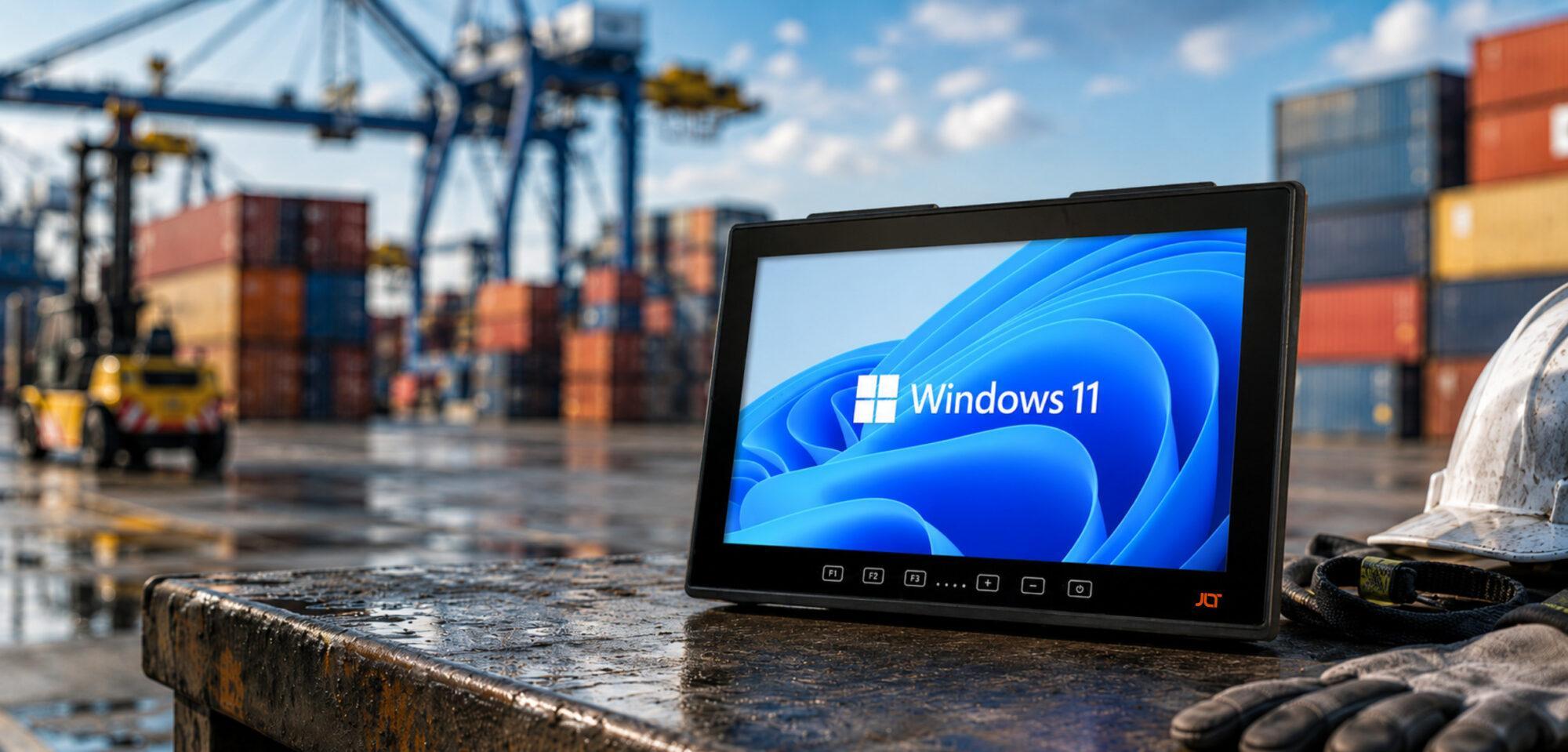
Industrial businesses are approaching a critical technology transition. As Windows 10 support deadlines continue to approach, organizations that rely on rugged computing devices must evaluate how their current infrastructure will support future operational requirements. Warehouses, ports, manufacturing facilities, and field service operations depend on reliable rugged devices that can perform reliably in demanding environments where downtime is not an option.
This shift is driving increased demand for rugged tablet Windows 11 solutions powered by Windows 11 IoT Enterprise LTSC. Built for industrial environments, the operating system offers long-term support, improved security, reduced update disruptions, and greater operational stability for mission-critical workflows.
What is a rugged tablet Windows 11 device?
A rugged tablet Windows 11 device combines industrial-grade hardware with Microsoft’s latest enterprise operating system platform. These rugged devices are engineered to operate reliably in harsh environments while supporting essential workflows across transportation, manufacturing, and field operations.
-
What makes a tablet rugged for industrial use?
Industrial environments expose devices to vibration, moisture, dust, temperature fluctuations, and heavy daily usage. Rugged tablets are specifically engineered to handle these conditions without compromising performance. Many devices are tested against MIL-STD-810H and IP-rated durability standards to ensure reliability in real-world environments.
Features such as hot-swappable batteries, glove-compatible touchscreens, vehicle docking support, and sunlight-readable displays also help maintain productivity during demanding operations.
-
How is Windows 11 designed for industrial environments?
Windows 11 IoT Enterprise LTSC is designed specifically for specialized and industrial devices that require long-term reliability. Unlike standard operating systems that receive frequent feature changes, the LTSC version prioritizes operational consistency and security without unnecessary disruptions.
This makes it particularly valuable for businesses that rely on stable workflows, dedicated industrial applications, and long device lifecycles.
-
How do rugged tablets differ from consumer devices?
Consumer tablets are designed for general productivity and entertainment. Rugged tablets prioritize uptime, durability, and operational continuity. Industrial devices are often deployed for many years in challenging environments where reliability directly impacts productivity and safety.
Organizations using rugged computers also require stronger connectivity, longer battery performance, and hardware platforms capable of supporting long-term software strategies.
Why are businesses moving from Windows 10 to Windows 11?
The upgrade journey from Windows 10 to Windows 11 is becoming increasingly important for industrial organizations seeking to maintain security and operational stability.
-
What does Windows 10 end of support mean for businesses?
Multiple Windows 10 versions are now moving beyond Microsoft’s support lifecycle, making migration planning increasingly important for industrial operations. This can increase cybersecurity risks and create operational vulnerabilities for industrial environments.
Businesses operating rugged devices purchased before 2020 may need to begin migration planning sooner than expected.
-
Why are older devices facing upgrade pressure?
Standard Windows 11 requirements introduced stricter hardware expectations, including TPM 2.0 and newer processor compatibility. Many older industrial devices were not originally designed for these requirements.
However, Windows 11 IoT Enterprise LTSC offers additional flexibility for specialized industrial hardware, helping organizations extend infrastructure investments while modernizing strategically.
-
Which industrial businesses should prioritize migration?
Ports, Manufacturing, Mining, and field service operations should prioritize migration planning early. These environments rely heavily on rugged computing devices for operational continuity, making unplanned downtime especially disruptive.
Organizations that begin evaluating device compatibility and application readiness early can reduce future deployment challenges.
What is Windows 11 iot enterprise ltsc?
Windows 11 IoT Enterprise LTSC is Microsoft’s long-term operating system platform developed for dedicated industrial and embedded devices.
-
How is it different from standard Windows 11?
Unlike standard Windows 11 versions, LTSC focuses on long-term stability instead of frequent feature updates. This allows industrial businesses to maintain consistent operating environments for mission-critical applications and workflows.
The platform also supports longer lifecycle management strategies, making it more suitable for industrial deployments.
-
Why does it offer better long-term stability?
Industrial environments often depend on specialized applications that require stable operating conditions over many years. Frequent software changes can introduce compatibility concerns or disrupt workflows.
Windows 11 IoT Enterprise LTSC is designed to support long-term operational reliability with fewer feature changes and extended lifecycle support.
-
How do reduced updates minimize disruptions?
Many industrial operations run continuously across multiple shifts. Frequent updates can interrupt workflows, delay operations, or require additional IT management.
Reduced feature updates help organizations maintain operational uptime while still receiving essential security support.
Can existing rugged devices support Windows 11?
Not every rugged device requires immediate replacement.
-
Does Windows 11 iot enterprise ltsc require tpm 2.0?
One advantage of Windows 11 IoT Enterprise LTSC is greater flexibility for specialized industrial hardware environments. Depending on the deployment scenario, some rugged devices may continue operating without the same hardware restrictions associated with standard Windows 11 installations.
This flexibility can help industrial organizations extend device usability while planning long-term upgrades.
-
How does it support older hardware?
Industrial hardware is often designed for significantly longer lifecycles than consumer devices. Rugged computers purchased years ago may remain operationally effective when paired with appropriate migration strategies.
Businesses should evaluate processor capability, memory performance, application compatibility, and operational requirements before making replacement decisions.
-
When should businesses replace existing devices?
Replacement planning should consider hardware age, operational demands, lifecycle support timelines, and application performance requirements. If rugged devices are struggling to support modern workloads or are approaching end-of-life, upgrading to newer rugged platforms may improve long-term reliability and efficiency.
Which industries benefit most from rugged tablet Windows 11 devices?
Several industries depend on rugged computing platforms to maintain operational continuity.
-
How does it support port and yard operations?
Ports and yard operations require rugged computers capable of operating outdoors in changing environmental conditions. Rugged tablets help support fleet coordination, cargo tracking, inventory visibility, and real-time communication.
-
Why is it valuable for field service teams?
Field service teams often work in remote or unpredictable environments where durable, rugged devices are essential. Rugged tablets help technicians access work orders, diagnostics, and service applications without workflow interruptions.
-
How does it support manufacturing environments?
Manufacturing operations rely on reliable rugged devices for inventory management, production monitoring, inspections, and reporting. Rugged tablets support these workflows while helping reduce downtime risks in fast-paced industrial environments.
Looking for Rugged Windows 11 Devices for Industrial Environments?
What features should businesses look for in rugged tablet Windows 11 devices?
Businesses evaluating rugged tablet Windows 11 solutions should focus on durability, connectivity, usability, and lifecycle support.
-
What durability standards matter most?
MIL-STD-810H testing and IP-rated protection are important indicators of rugged reliability. These certifications help ensure devices can withstand drops, vibration, dust, and moisture exposure.
-
Why is battery performance important?
Long battery life and hot-swappable battery support are critical for operations running across extended shifts. Reliable power management helps maintain productivity without unnecessary interruptions.
-
What connectivity features support industrial workflows?
Industrial environments often require Wi-Fi 6, Bluetooth, GPS, LTE, and private network support to maintain continuous communication across facilities and outdoor operations.
-
Why does screen visibility matter?
Sunlight-readable displays and glove-compatible touchscreens improve usability in outdoor and industrial conditions where standard consumer displays may struggle.
How should businesses prepare for Windows 11 migration?
Migration planning should begin with a structured evaluation process.
-
How should it teams evaluate existing devices?
Organizations should review hardware age, lifecycle status, compatibility requirements, and overall device performance before beginning deployment planning.
-
How can businesses test application compatibility?
Industrial applications should be validated early to identify compatibility concerns before large-scale migration begins. Pilot testing can help reduce operational risk during deployment.
-
How can organizations reduce deployment disruptions?
Phased rollouts, employee training, and staged deployment strategies can help minimize operational downtime and maintain productivity during migration projects.
How JLT helps businesses deploy rugged tablet Windows 11 solutions
JLT Mobile Computers helps industrial organizations prepare for long-term operational stability with rugged Windows 11 solutions.
-
How JLT validates hardware compatibility
JLT evaluates rugged hardware configurations to help ensure stable Windows 11 IoT Enterprise LTSC deployment across industrial environments.
-
How JLT supports migration planning
JLT helps businesses assess infrastructure readiness, application compatibility, and migration timelines to reduce deployment disruptions.
-
How JLT helps future-proof industrial operations
By combining rugged computing expertise with long-lifecycle hardware platforms, JLT helps organizations modernize operations while supporting long-term reliability and operational continuity.
Frequently asked questions (faqs)
Is Windows 11 IoT Enterprise LTSC Designed for Industrial Environments?
Yes. It is specifically designed for industrial and mission-critical systems that require long-term stability and reduced update disruptions.
Can Older Rugged Tablets Support Windows 11?
Why Are Businesses Upgrading From Windows 10?
Which Industries Commonly Use Rugged Windows 11 Tablet Devices?
What Should Businesses Evaluate Before Migration?
What Does JLT Mobile Computers Help Businesses With During Windows 11 Migration?
JLT Mobile Computers helps industrial organizations evaluate rugged hardware compatibility, reduce deployment disruptions, validate application readiness, and support long-term operational stability during migration to Windows 11 IoT Enterprise LTSC.
JLT Mobile Computers helps businesses prepare rugged devices for the reliable deployment of Windows 11 IoT Enterprise LTSC.