
When a supervisor loses connectivity mid-inspection, a tablet dies in -15°C cold storage, or a screen washes out in sunlight, the cost isn’t the device—it’s the incomplete inspection, delayed tasks, and compliance gap that follow.
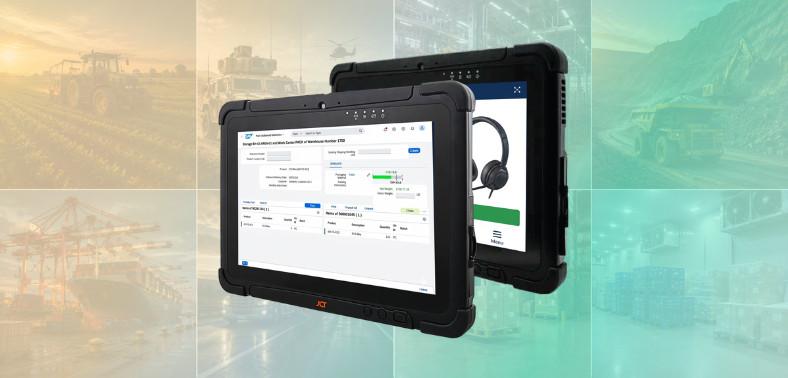
A rugged field tablet isn’t simply a consumer tablet wrapped in a protective case. It’s a purpose-built platform engineered to withstand repeated impacts, continuous vibration, airborne dust, moisture, plus extreme operating temperatures encountered throughout every shift. This guide covers key standards, wireless capabilities, and OS choices that determine the most suitable solution.
What is a rugged field tablet? (quick answer)
A purpose-built industrial device for field operations — inspections, maintenance, yard management, and supervisory workflows requiring mobility, durability, and connectivity beyond a fixed facility. The best combines MIL-STD-810H construction, sunlight-readable displays, PowerTouch touchscreens, WiFi 6E plus WWAN, and long-lifecycle OS support.
-
What separates a rugged field tablet from a standard industrial tablet?
Standard industrial tablets suit fixed deployments; rugged field tablets are built for mobility in dynamic operating conditions, delivering greater resilience through enhanced drop resistance, outdoor brightness, and connectivity range.
-
When does an on-site operation need a purpose-built rugged tablet?
For teams working beyond fixed workstations, where the tablet serves as the primary interface for inspection records, work instructions, and compliance documentation, a rugged tablet is the only viable solution.
What is a rugged field tablet?
“Rugged” is applied loosely across the market, and the gap between genuine field-grade ruggedness and a marketing claim decides whether a device survives its first year.
-
How are rugged field tablets defined?
An industrial device engineered for physical handling, environmental exposure, while supporting uninterrupted mobility — with sealed construction, shock-absorbing architecture, extended operating temperature capability and outdoor-readable displays.
-
What standards make a tablet field-ready?
Field-ready ruggedness is defined by independently verified standards, not manufacturer claims.
-
Ip ratings for dust, moisture, and field exposure
IP65 (full protection against dust ingress, low-pressure water spray) is the recommended standard for field operations; IP66 extends to powerful water jets, making it suitable for refrigerated and washdown environments as well as food and beverage operations.
-
Drop and shock resistance for field conditions
MIL-STD-810H independently validates that devices can withstand repeated drops, mechanical shocks, and vibration encountered during everyday field use.
-
Temperature range—from cold storage to outdoor heat
Field tablets must run from below freezing to above 50°C; automatic screen heaters activate before frost forms, whereas consumer tablets manage only 0–35°C.
Not sure which rugged field tablet fits your operation?
Where are rugged field tablets used in the usa?
They’re deployed across the most mobile industrial roles, each with distinct hardware demands.
-
How do field tablets support supervisors and quality inspectors on plant floors?
They access work instructions, inspection records, and production data at the point of work—on sealed, shock-resistant hardware built for vibration, dust, and oil exposure.
-
How are they used in yard management and outdoor logistics?
They give real-time visibility into vehicle movements and inventory outdoors, where sunlight-readable displays and WWAN are baseline requirements.
-
How do they support maintenance engineers and field service teams?
They provide work orders, maintenance histories, and diagnostics across bays, plant rooms, and campuses where the device is carried and exposed to full field conditions.
-
How do they perform in cold storage and temperature-controlled field operations?
They transition between -25°C freezers and ambient zones without condensation or battery failure—via automatic screen heaters, PowerTouch, and IP66 sealing.
-
How are they used in transportation and fleet management?
They give drivers and fleet managers mobile access to routing and compliance data, with WWAN and Private LTE holding connectivity across large hubs.
Why consumer tablets struggle in demanding field conditions
The conditions of every field shift are exactly what consumer hardware isn’t engineered to withstand.
-
What field conditions destroy consumer-grade hardware?
A single drop cracks a consumer housing, vibration loosens connections, moisture enters unsealed gaps, sunlight kills readability, and cold drains batteries—daily conditions, not edge cases.
-
How do repeated drops, continuous vibration, and moisture affect standard tablet lifecycles?
Repeated drops can damage screens, while constant vibration may loosen connectors and moisture can eventually reach the PCB—creating multiple failure points that consumer tablets are not engineered to handle in field environments.
-
What is the operational cost of a computing device failure?
Never just the device—it’s the incomplete inspection, missing compliance record, IT ticket, and stopped work until replacement.
What makes the best rugged field tablet for US operations?
Build quality, display, connectivity, and OS together determine reliability across a five- to ten-year operational lifespan.
-
What build features are required for true field-ready ruggedness?
Ruggedness is an engineering outcome built into the housing, internal architecture, and sealing—not a product claim.
-
Sealed housing against particulates, moisture, and environmental exposure
IP65 or IP66 sealing is the baseline; without it, every other ruggedness claim fails at first significant exposure.
-
Drop protection and shock absorption during Mobile operations
MIL-STD-810H requires shock-absorbing mounting, impact-distributing geometry, and board-to-board connectors—design-stage decisions no case can retrofit.
-
What display features matter in field conditions?
A display that fails outdoors, misses gloved inputs, or frosts in cold storage interrupts operations at the point of activity.
-
High-brightness screens for open-air environments
800 NITS or higher is the outdoor standard; dimmer displays force operators to find shade, adding friction and safety risk.
-
Glove-friendly touch for field operators — PowerTouch explained
PowerTouch enables accurate interaction with gloved and wet hands—the baseline for cold storage, open-air maintenance, and production facilities.
-
What connectivity keeps on-site teams connected
A device that loses connectivity doesn’t just slow the operator — it stops them entirely.
-
Wifi 6e and wwan for coverage beyond four walls
WiFi 6E at 9.6 Gbps clears dead zones indoors; WWAN extends coverage to outdoor yards and field sites—both required for shifts spanning indoors and out.
-
Private lte for outdoor sites and large industrial campuses
Private LTE provides dedicated, reliable coverage across ports, mining sites, and large campuses where public cellular and shared WiFi don’t reach.
-
What os powers the most productive field workflows?
The OS determines the app ecosystem, management platform, and support lifecycle the device depends on.
-
Windows 11 iot ltsc for enterprise field software
Long-term support aligned with industrial lifecycles, without forced consumer updates—the right fit for Windows-based field applications. Windows 10 reached the end of support in October 2025.
-
Industrial Android x86 for modern field workflows
Built specifically for hardened industrial use, it delivers touch-first interfaces, business-critical applications, and Android Enterprise device management across round-the-clock shifts.
How to choose between a rugged field tablet and a vehicle-mounted terminal
Both are purpose-built industrial platforms serving fundamentally different roles.
-
When is a field tablet the right choice?
When the operator moves freely across the operation, maintenance engineers, inspectors, supervisors, plus on-site service crews keep the device with them and require connectivity everywhere.
-
When does a vehicle-mounted terminal become the stronger option?
When the operator works primarily from a forklift, reach truck, or crane and needs a fixed, vehicle-powered platform built for continuous vibration.
-
How do field tablets and vmts work together across an operation?
VMTs cover vehicle-based workflows; field tablets cover mobile supervisory and inspection workflows. The most effective deployments use both.
How rugged field tablets improve US industrial and field operations
The impact shows up in inspection completion, compliance accuracy, and real-time data quality.
-
How do they enable real-time data capture in the field?
Results are recorded at the asset and logged at the equipment—eliminating the transcription errors and record gaps of paper-based entry.
-
How do they reduce paperwork and manual errors?
Structured digital forms with mandatory fields remove the manual transcription step — a compliance risk reduction, not just a productivity gain.
-
How do they improve safety and compliance reporting?
Immediate access to procedures and checklists, plus real-time capture of observations and near-misses, improves reporting rates and escalation speed.
How JLT supports rugged field device deployments in the usa
With more than 30 years of in-house engineering and production in Sweden, JLT delivers rugged field tablets backed by a full ecosystem of software, services, and support.
-
How JLT field tablets are engineered for US industrial conditions
Single-piece all-aluminium housings, board-to-board connectors, PCBs fixed to the housing, PowerTouch displays up to 1,200 NITS, WiFi 6E plus WWAN and Private LTE, TPM 2.0, and a 3-year warranty—built and tested in Växjö, Sweden.
-
How JLT insights provides fleet visibility across field devices
Real-time fleet visibility—remote diagnostics, usage analytics, maintenance alerts, impact monitoring, and battery health—identifies issues before they become field failures.
-
How JLT care ensures field tablets stay operational
A no-questions-asked agreement covering all failures with guaranteed repair turnaround, worldwide pick-up and drop-off, and fixed-price coverage in 3-year and 5-year terms.
Want to find the right rugged solution for your US operation?
Frequently asked questions
What is the difference between a rugged field tablet and a vehicle-mounted terminal?
What IP rating do I need for outdoor field operations?
Can rugged field tablets work in cold storage?
What connectivity do rugged field tablets need outdoors?
Windows or Android for rugged field tablets?
How long do JLT rugged field tablets last?
Still have questions? Our experts are ready to help.