
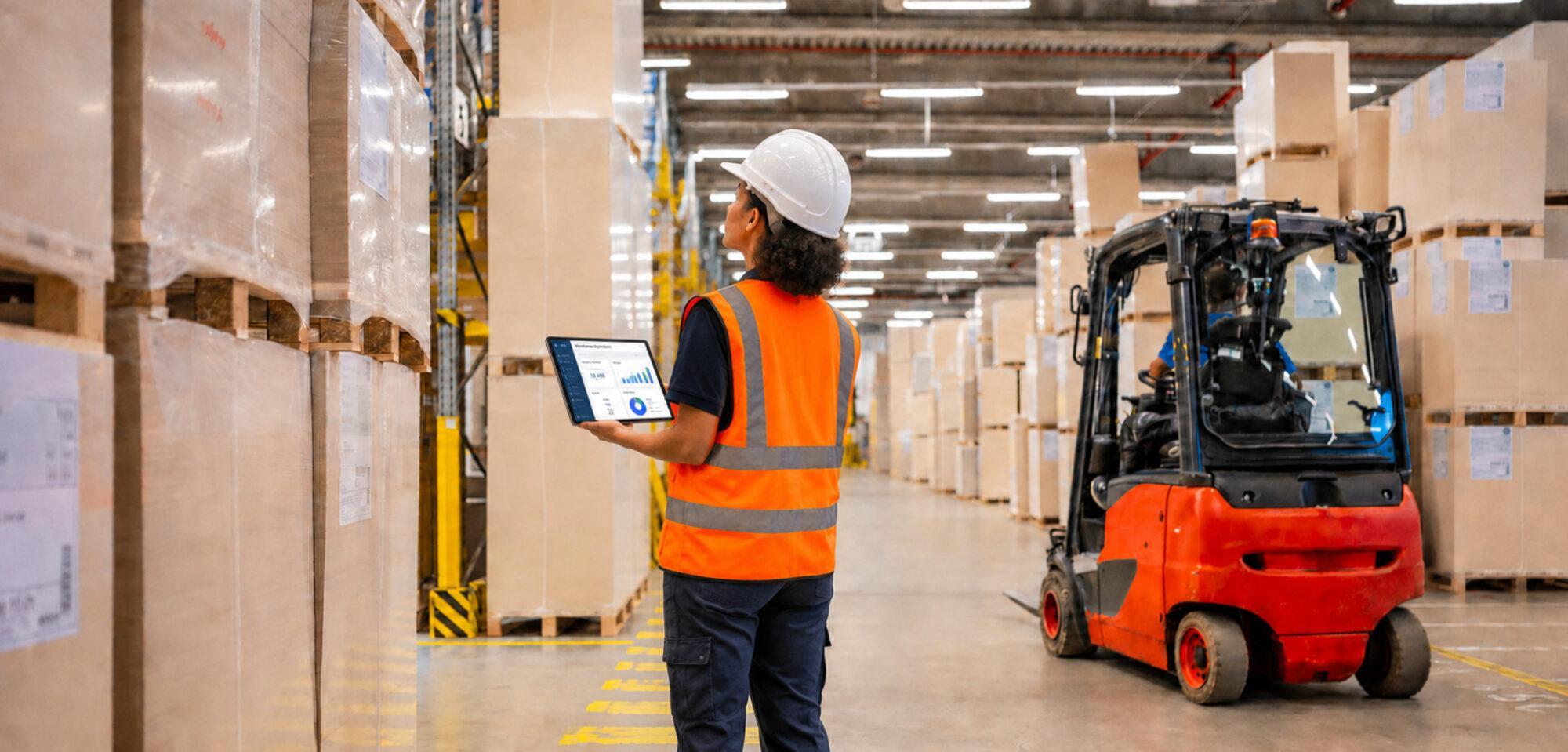
In ports, mining sites, transportation fleets, cold storage facilities, manufacturing plants, and outdoor logistics operations, technology failures are far more than an IT inconvenience — they directly impact productivity, throughput, safety, and operational uptime.
A frozen touchscreen inside a cold storage facility, unstable connectivity in a container yard, or device failures caused by constant vehicle vibration can delay workflows, disrupt supply chains, and increase operational expenses rapidly.
For this reason, industrial organizations in 2026 are investing in purpose-built industrial tablets engineered specifically for demanding operating conditions, uninterrupted connectivity, long-term reliability, and mission-critical performance.
Modern enterprise tablets are no longer just mobile devices. They have become operational tools supporting:
- Real-time inventory visibility
- Fleet and yard management
- Manufacturing workflows
- Port and intermodal activities
- Transport and supply chain operations
- Mining and energy operations
- Connected mobile workforces
- Edge computing and automation
The right industrial tablet can help organizations:
- Reduce operational downtime
- Improve workforce productivity
- Increase operational visibility
- Minimize hardware failures
- Support real-time decision-making
- Lower long-term ownership costs (TCO)
However, choosing the right rugged tablet in 2026 requires more than comparing hardware specifications. Businesses must evaluate:
- Rugged durability
- Vibration resistance
- Connectivity reliability
- Wireless infrastructure compatibility
- Lifecycle support
- Perfoemance in different environments
- Long-term operational scalability
The real cost associated with mobility is rarely the device itself—it is the downtime, workflow disruption, replacement frequency, and productivity loss caused by unreliable hardware.
This guide explains how to choose the right rugged tablet for your business in 2026 while avoiding costly purchasing mistakes that impact long-term operational performance.
What Is an Industrial Tablet?
An industrial tablet is a rugged portable computer specifically designed for challenging industrial and field environments where standard consumer devices cannot reliably operate.
Unlike consumer tablets designed for office work or entertainment, industrial tablets are built to withstand:
- Moisture, dust, and particle ingress
- Constant vibration
- Repeated drops
- Extreme temperatures
- Outdoor worksites
- Continuous daily operation
These purpose-built devices are commonly deployed across sectors including:
- Warehousing
- Transportation and logistics
- Ports
- Mining
- Construction
- Manufacturing
- Utilities and field services
- Cold storage
Their purpose is simple: deliver reliable mobile computing performance where operational continuity is critical.
Industrial Tablet vs Consumer Tablet: Key Differences
By comparison, industrial tablets are designed to maximize operational reliability, uptime, and long-term service life.
Build Quality and Reliability
Industrial tablets feature:
- Reinforced chassis
- Shock-resistant construction
- Sealed ports against dust and moisture
- Industrial-grade internal components
- MIL-STD-tested durability
- High-vibration resistance
Many industrial environments expose hardware to constant vibration generated by forklifts, cranes, heavy machinery, vehicle fleets, and other mobile equipment.
JLT rugged tablets are engineered specifically to perform reliably in high-vibration operating conditions where standard consumer devices are far more likely to experience failures.
Unlike two-piece systems that rely on external docks and connectors, JLT rugged computing solutions utilize single-piece construction designs that reduce hardware failure points and improve long-term reliability.
Performance Under Challenging Conditions
Industrial tablets are engineered to operate reliably across conditions including:
- Cold storage facilities
- Outdoor ports and yards
- Dust-heavy mining operations
- Manufacturing facilities
- Transportation fleets
- Wet and humid environments
Features such as:
- Sunlight-readable displays
- Wide operating temperature ranges
- Anti-glare screens
- Glove-compatible touchscreens
- Wet-touch functionality
are essential for productivity.
Lifespan and Total Cost of Ownership
Industrial tablets often require a higher initial investment, yet they typically deliver significantly lower long-term operational costs.
Unlike consumer devices that may require frequent repairs or replacement, industrial tablets are designed for extended service life, reducing maintenance requirements and minimizing operational interruptions.
| Myth | Reality |
| Industrial tablets are too bulky | Modern industrial tablets are lightweight and deliver strong computing performance |
| Any rugged tablet will work | Choosing the right industrial tablet depends on your operating environment and workflow requirements |
| Consumer tablets cost less | Industrial tablets often provide a significantly lower overall ownership cost compared to consumer-grade alternatives |
Why Industrial Tablets Matter More Than Ever in 2026
Industrial mobility is no longer optional. It is now central to operational performance, automation, and digital transformation strategies.
The Rise of Connected Operations and Real-Time Data
Modern industrial operations depend heavily on real-time information sharing.
Rugged tablets support:
- Live stock tracking
- Fleet oversight
- Equipment diagnostics
- Digital inspections
- Real-time reporting
- Workforce collaboration
Without reliable mobile computing, operational delays and visibility gaps increase rapidly.
Adoption of 5G, Android Enterprise, and Edge Computing
The rapid growth of:
- Private 5G/LTE
- Android Enterprise
- Edge computing
- Industrial IoT
- Cloud-connected workflows
is transforming industrial mobility.
Industrial tablets now function as operational hubs capable of processing and transmitting mission-critical data instantly across distributed operations.
Private 5G/LTE for Industrial Mobility
Industrial organizations are increasingly adopting Private 5G/LTE networks to improve connectivity reliability across ports, transportation hubs, yards, and outdoor industrial facilities.
Compared to traditional Wi-Fi environments, Private LTE and 5G provide:
- More stable mobility
- Better signal penetration
- Lower latency
- Improved security
- Fewer wireless dead zones
- Reliable roaming for moving assets
This is especially important in environments with heavy machinery, metal infrastructure, cranes, containers, and large outdoor operational areas.
JLT rugged computing solutions are designed to support advanced private wireless infrastructure, enabling reliable communication across ports, warehouses, manufacturing facilities, and other demanding operating locations.
Planning a Private LTE or 5G deployment?
Growing Demand Across Logistics, Manufacturing, and Field Services
Demand for industrial tablets continues to rise as organizations increasingly require:
- Mobile workforce flexibility
- Faster operational decision-making
- Real-time data visibility
- Outdoor operational reliability
- Connected field operations
- Continuous uptime
Sectors including ports, mining, transportation, manufacturing, cold storage, and outdoor logistics are accelerating rugged mobility adoption to improve throughput and reduce downtime.
Core Features to Look for in an Industrial Tablet
Choosing the right industrial tablet involves assessing the features that have the greatest influence on operational reliability and workforce efficiency.
Ruggedness and Environmental Protection
Durability continues to be one of the most important purchasing considerations.
Understanding IP Ratings (IP65, IP67)
IP ratings indicate the level of protection against:
- Dust ingress
- Water ingress
For instance:
- IP65 protects against dust and water jets
- IP67 protects against temporary water immersion
Industrial organizations operating in harsh environments require IP-rated equipment that helps maintain uptime despite challenging operating conditions.
MIL-STD-810 Drop and Vibration Resistance
MIL-STD-810 certification validates resistance to:
- Mechanical shock
- Repeated drops
- Heavy vibration
- Temperature stress
This is particularly important for:
- Forklift-mounted devices
- Transportation fleets
- Port equipment
- Mining operations
- Outdoor field environments
JLT rugged tablets undergo extensive testing and are specifically built to perform reliably across demanding industrial operations.
Operating Temperature Capabilities
Industrial tablets must operate reliably across conditions such as:
- Cold storage facilities
- Outdoor summer heat
- Rapid temperature transitions
- Humid operational environments
Cold storage operations create unique challenges, such as:
- Condensation
- Frozen displays
- Touchscreen responsiveness with gloves
- Temperature shock
JLT rugged tablets are engineered to support reliable operation in demanding cold-chain applications.
Need rugged tablets built for high-vibration or freezer environments?
Display and Usability
Ease of use plays a direct role in worker productivity.
Sunlight-Readable Screens
Outdoor visibility challenges can severely impact operational efficiency.
Industrial tablets should include:
- High-brightness displays
- Anti-glare technology
- Direct optical bonding
Port terminals, transportation yards, mining operations, and field environments require displays that remain visible under direct sunlight.
JLT rugged tablets are engineered with sunlight-readable screens and advanced optical bonding technology to improve visibility across harsh outdoor industrial worksites.
Glove-Friendly and Wet-Touch Capability
Industrial workers frequently use while:
- Wearing gloves
- Working in the rain or moisture
- Operating in cold conditions
Industrial tablets should support:
- Glove-compatible touch
- Wet-touch functionality
- Responsive industrial interfaces
These capabilities improve workflow continuity and reduce operational delays.
Performance and Connectivity
Industrial operations require fast and reliable connectivity.
Processor, RAM, and Storage Considerations
Businesses should evaluate:
- Application complexity
- Multitasking demands
- Edge computing requirements
- Real-time data processing needs
As enterprise software, automation systems, and AI-powered workflows become more demanding, businesses should avoid underpowered devices that may require premature replacement.
Higher-performance industrial tablets often maintain operational speed and responsiveness longer, helping organizations extend refresh cycles and reduce future IT costs.
4G/LTE, 5G, Wi-Fi 6, and Bluetooth Support
Reliable wireless connectivity is critical for industrial operations.
Industrial tablets should support:
- Wi-Fi 6
- 4G/LTE
- 5G
- Bluetooth
- GPS
- Enterprise roaming capabilities
Strong wireless performance is essential for:
- Outdoor logistics
- Port operations
- Transportation fleets
- Mining sites
- Large industrial facilities
Battery Life and Power Management
Battery reliability directly impacts operational uptime.
Hot-Swappable Batteries for 24/7 Operations
Hot-swappable batteries allow workers to replace batteries without shutting down devices.
This is critical for:
- Ports operating 24/7
- Transportation fleets
- Manufacturing operations
- Field service teams
- Continuous logistics workflows
Reliable battery systems reduce operational interruptions and maintain workforce productivity.
Operating System: Android vs Windows
Operating system selection should align with operational workflows and software ecosystems.
Choosing Based on Existing Software Ecosystem
Android may be preferred for:
- Mobility-focused workflows
- Simpler user interfaces
- Enterprise mobility management
- Lightweight field operations
Windows may be preferred for:
- Legacy enterprise software
- Industrial automation systems
- Complex operational applications
- Port and manufacturing systems
Organizations should prioritize software compatibility and long-term scalability when selecting a platform.
How to Match an Industrial Tablet to Your Industry
Different industries require different rugged mobility capabilities.
Ports and Intermodal Operations
Port and intermodal environments place extreme demands on industrial tablets due to:
- Constant vibration
- Salt air exposure
- Outdoor glare
- Continuous mobility
- Heavy equipment usage
- 24/7 operational demands
Industrial tablets support:
- Container tracking
- Yard management
- Fleet coordination
- Dispatch operations
- Digital inspections
Manufacturing and Production Floors
Manufacturing environments require:
- Dust resistance
- Workflow digitization
- Real-time monitoring
- Industrial automation integration
- Long-term operational reliability
Industrial tablets help reduce manual processes while improving operational visibility.
Mining, Transportation, and Field Services
Mining and outdoor transportation environments demand devices capable of surviving:
- Heavy shock and vibration
- Dust infiltration
- Extreme temperatures
- Remote operational conditions
Field workers require:
- Outdoor-readable displays
- Long battery life
- Reliable connectivity
- Rugged durability
JLT rugged mobility solutions are engineered specifically for these mission-critical industrial environments.
Looking for industrial tablets for ports, mining, transportation, or outdoor logistics?
Beyond Hardware: Evaluating the Vendor
Choosing the right industrial tablet vendor is equally important as choosing the hardware itself.
Warranty, Service Agreements, and Support
Industrial organizations should evaluate:
- Warranty coverage
- Repair turnaround times
- Spare part availability
- Technical support quality
- Long-term lifecycle support
Slow support response times can create significant operational disruptions.
Customization and Integration Capabilities
Every industrial workflow is different.
The right vendor should support:
- Custom mounting solutions
- Wireless optimization
- Peripheral integration
- Workflow-specific configurations
- Industrial software compatibility
This ensures better long-term operational alignment.
Software Ecosystem and Device Management
Industrial tablets should support:
- Enterprise mobility management
- Remote monitoring
- Security policies
- Device updates
- Fleet-wide management tools
Modern industrial mobility requires centralized operational visibility and device management.
A Practical Framework to Choose the Right Industrial Tablet
Selecting the right industrial tablet requires a structured evaluation process.
Step 1: Map Your Operating Environment
Evaluate:
- Temperature exposure
- Dust levels
- Moisture conditions
- Vibration intensity
- Outdoor usage
- Operational mobility
Environmental analysis determines required ruggedness levels.
Step 2: Define Workflow and Software Requirements
Assess:
- Business applications
- Connectivity requirements
- Integration needs
- User interaction patterns
- Data collection workflows
Industrial tablets should support workflows naturally instead of creating operational friction.
Step 3: Calculate True Total Cost of Ownership
Do not focus only on the purchase price.
Consider:
- Downtime costs
- Hardware replacement frequency
- Productivity impact
- Repair expenses
- Lifecycle support
- Operational interruptions
The real cost of unreliable hardware is operational downtime.
Step 4: Pilot Before You Scale
Before deployment:
- Test devices in real environments
- Validate wireless performance
- Gather worker feedback
- Evaluate usability under operational conditions
Piloting reduces deployment risks significantly.
Future-Proofing Your Investment
Industrial technology continues evolving rapidly.
Scalability, Upgradability, and Long-Term ROI
Future-proof industrial tablets should provide:
- Long-term software support
- Expandable connectivity
- Upgrade flexibility
- Enterprise security compatibility
- Extended operational lifecycles
Organizations investing in scalable rugged mobility solutions reduce future replacement costs and improve long-term ROI.
Final Thoughts: Making the Right Choice in 2026
Choosing the right industrial tablet in 2026 requires balancing:
- Rugged durability
- Connectivity reliability
- Workflow compatibility
- Long-term support
- Scalability
- Operational efficiency
The best industrial tablet is not simply the one with the highest specifications — it is the one that aligns most effectively with your operational environment and business workflows.
JLT Mobile Computers specializes in rugged mobility solutions engineered specifically for harsh industrial environments such as:
- Ports and intermodal operations
- Transportation and logistics
- Mining and energy
- Cold storage
- Manufacturing
- Outdoor industrial operations
JLT rugged tablets are designed to help organizations:
- Improve operational visibility
- Reduce downtime
- Increase workforce productivity
- Support uninterrupted mobility
- Achieve long-term reliability