
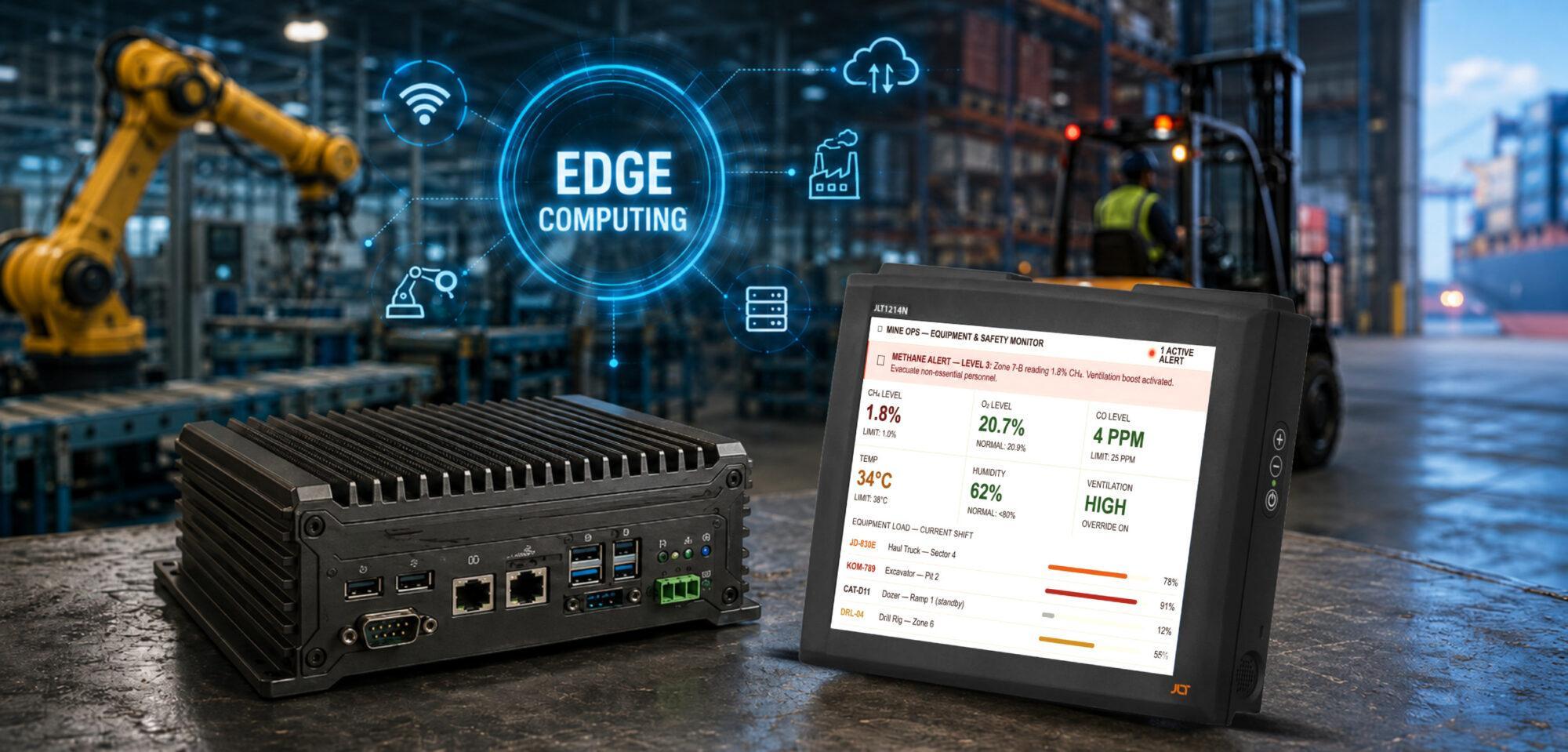
Industrial operations generate enormous amounts of data every second. From warehouse scanners and vehicle-mount computers to automation equipment and logistics applications, businesses rely on continuous data flow to maintain productivity and operational visibility. However, processing this information efficiently has become increasingly challenging as industrial environments demand faster response times and uninterrupted connectivity.
Industrial edge computing helps businesses process and analyze operational data closer to where activities occur. Instead of relying entirely on centralized cloud infrastructure, edge-enabled environments allow rugged devices and industrial equipment to support real-time workflows directly at warehouses, manufacturing facilities, transportation hubs, and field locations.
By combining edge computing with rugged computers designed for demanding environments, industrial organizations can improve uptime, reduce latency, and maintain operational continuity.
What Is Industrial Edge Computing?
Industrial edge computing refers to processing operational data near the source where it is generated rather than sending all information to centralized data centers or cloud environments.
-
What Defines Edge Computing in Industrial Environments?
Industrial environments often require immediate access to operational data. Warehouses, ports, and manufacturing facilities depend on real-time visibility to keep workflows moving efficiently.
Edge computing allows rugged devices, connected equipment, and industrial applications to process information locally, helping operations respond faster to changing conditions.
-
How Does Industrial Edge Computing Work in Real Time?
Operational data collected from scanners, sensors, automation equipment, and rugged computers can be analyzed directly at the edge before selected information is transferred to centralized infrastructure.
For example, rugged computers operating inside warehouse vehicles can process inventory updates, barcode scans, and workflow data locally without depending entirely on remote connectivity.
-
How Is It Different from Cloud-Based Computing?
Cloud computing relies on centralized infrastructure to process and store information remotely. While cloud environments remain valuable for analytics and long-term storage, industrial operations often require immediate responsiveness.
Edge computing reduces delays by processing information closer to operations, helping businesses maintain productivity even when network connectivity becomes unstable.
Where Is Industrial Edge Computing Used?
Edge-enabled operations support a wide range of demanding operational environments.
-
How Is It Applied in Manufacturing and Smart Factories?
Manufacturing facilities rely on continuous operational visibility to maintain production efficiency. Edge computing supports machine monitoring, workflow coordination, and automated production processes in real time.
This allows manufacturers to respond faster to operational changes while minimizing disruptions across production lines.
-
How Does It Improve Operations in Cold Storage and Port Terminals?
Cold storage facilities often experience environmental and connectivity challenges that can affect data processing. Edge-enabled rugged devices help maintain reliable access to operational information in temperature-controlled environments.
Port terminals also depend heavily on real-time communication and operational coordination. Rugged computers operating at the edge help support cargo tracking, yard visibility, and fleet management in outdoor conditions.
-
How Does It Support Yard Management, Construction, and Mining Operations?
Construction sites, yard operations, and mining environments frequently operate in remote locations where stable connectivity may not always be available. Edge computing allows rugged devices to continue processing operational data locally, helping maintain workflow continuity.
These environments also require rugged computers capable of withstanding vibration, dust, moisture, and temperature fluctuations.
Challenges in Traditional Industrial Data Processing
Many industrial organizations still rely heavily on centralized infrastructure for operational data processing.
-
Why Does Cloud-Only Processing Create Latency Issues?
Sending operational data to centralized cloud environments introduces delays that may affect time-sensitive workflows. In industrial operations, even small delays can reduce productivity and operational responsiveness.
Edge computing helps minimize latency by processing data closer to where operations occur.
-
How Do Network Limitations Affect Operations?
Industrial facilities often experience inconsistent connectivity due to remote locations, outdoor operations, or large facility layouts. Dependence on constant cloud connectivity can create operational risks during network interruptions.
Local data processing helps maintain operational continuity when connectivity becomes limited.
-
What Are the Risks of Downtime and Data Delays?
Downtime can affect inventory accuracy, production schedules, fleet coordination, and overall operational efficiency. Delayed access to information may also reduce visibility into equipment performance and workflow status.
Businesses focused on operational continuity increasingly rely on rugged edge devices to support continuous workflows in challenging environments.
Why Industrial Edge Computing Improves Industrial Operations
Edge processing helps organizations improve responsiveness, reliability, and operational efficiency.
-
How Does It Enable Real-Time Decision-Making?
By processing data locally, businesses can react faster to operational conditions across warehouses, manufacturing floors, and transportation operations.
Real-time operational visibility helps improve coordination and workflow efficiency.
-
How Does It Improve System Reliability and Uptime?
Industrial operations depend on reliable access to operational data. Edge-enabled environments reduce dependence on centralized infrastructure, helping maintain uptime even during network disruptions.
Rugged computers designed for continuous operation further support operational reliability in demanding conditions.
-
How Does It Reduce Dependency on Centralized Systems?
Edge computing distributes processing capabilities across operational environments instead of relying entirely on centralized infrastructure. This improves scalability and reduces operational bottlenecks.
Industrial Edge Computing vs Cloud Computing
Edge and cloud computing often work together to support industrial workflows.
-
How Do Edge and Cloud Computing Differ in Industrial Use?
Edge computing focuses on localized, real-time processing, while cloud computing supports centralized analytics, reporting, and long-term data storage.
Industrial businesses commonly use edge computing for operational responsiveness and cloud infrastructure for broader business visibility.
-
When Should You Use Edge Instead of Cloud?
Edge computing is especially valuable when operations require immediate responsiveness, low latency, or reliable local processing in environments with unstable connectivity.
-
How Do They Work Together in Hybrid Environments?
Many industrial organizations use hybrid environments where rugged edge devices process operational data locally while cloud platforms support centralized reporting and analytics.
This combination helps improve operational efficiency while maintaining enterprise-wide visibility.
Role of Rugged Devices in Industrial Edge Computing
Rugged computers play an important role in supporting reliable edge-enabled operations.
-
Why Are Rugged Systems Required at the Edge?
Industrial operations expose devices to vibration, dust, moisture, temperature fluctuations, and heavy daily usage. Standard consumer hardware may struggle to maintain reliable performance under these conditions.
Purpose-built rugged computers help support continuous operations in demanding environments.
-
How Do They Perform in Harsh Industrial Environments?
Rugged devices are engineered specifically for industrial workflows and real-world operating conditions. Features such as sealed designs, sunlight-readable displays, and durable mounting options help improve long-term reliability.
-
How Do They Support Continuous Operations?
Industrial businesses often operate around the clock. Rugged edge devices support continuous workflows with reliable connectivity, strong performance, and extended operational lifecycles.
Features to Look for in Industrial Edge Computing Solutions
Businesses evaluating edge-enabled infrastructure should focus on reliability, performance, and environmental durability.
-
What Processing Capabilities Are Required at the Edge?
Edge-enabled environments require reliable computing performance capable of processing operational data locally without delays.
-
How Important Is Connectivity and Integration?
Reliable wireless connectivity, integration with operational software, and compatibility with industrial applications are important for maintaining efficient workflows.
-
What Environmental Protection Standards Are Needed?
Industrial environments often require rugged devices tested against MIL-STD-810H and IP-rated standards for protection against vibration, dust, moisture, and temperature exposure.
How Industrial Edge Computing Improves Efficiency and Productivity
Real-time operational processing supports efficiency across multiple workflows.
-
How Does It Reduce Downtime in Operations?
Local data processing helps maintain workflows even during temporary connectivity interruptions, reducing the risk of operational downtime.
-
Can It Improve Workflow Efficiency?
Real-time operational visibility improves coordination across warehousing, logistics, manufacturing, and transportation environments.
-
How Does It Support Predictive Maintenance?
Operational data processed at the edge can help businesses monitor equipment performance and identify maintenance concerns before failures occur.
How JLT Enables Reliable Industrial Edge Computing Solutions
JLT Mobile Computers provides rugged computing solutions designed for continuous operation in demanding industrial environments. With decades of experience supporting logistics, ports, manufacturing, transportation, and mining operations, JLT helps businesses maintain reliable access to operational data where it matters most.
JLT rugged computers are purpose-built for real-world industrial conditions and support continuous operations indoors or outdoors, helping organizations improve productivity, reduce downtime, and maintain operational continuity.
Frequently Asked Questions (FAQs)
What Is Edge Computing in Industrial Environments?
Edge computing refers to processing operational data closer to where activities occur instead of relying entirely on centralized infrastructure.